Korean Vegetable Pancakes Recipe
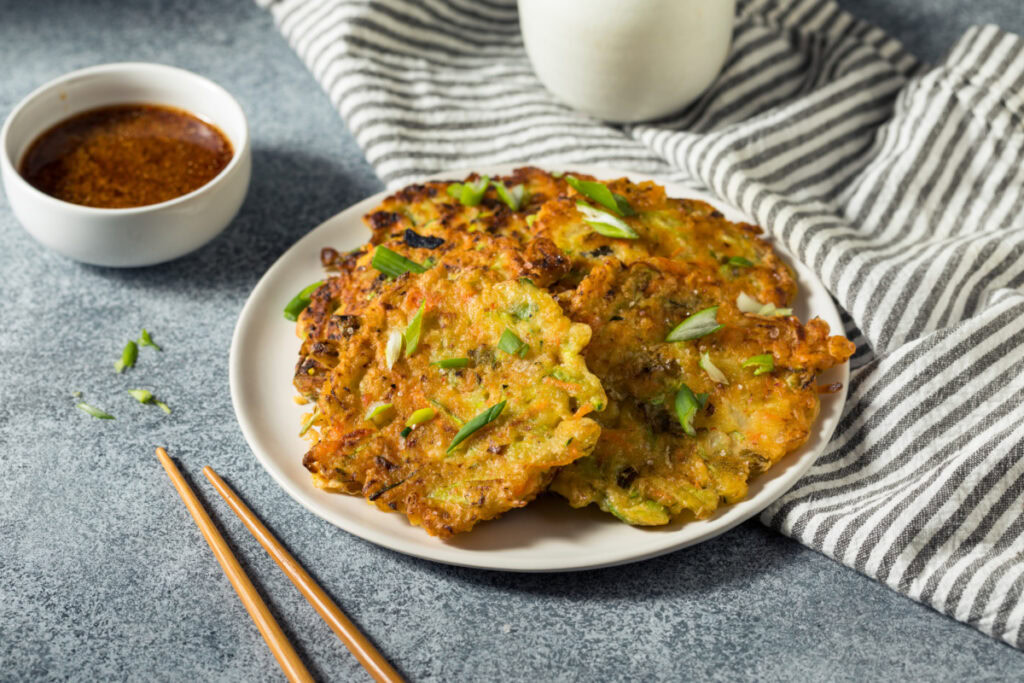
Korean vegetable pancakes are these crispy, savory bites made from a simple batter and whatever fresh veggies you’ve got around.
Folks call them “yachaejeon” in Korea, and honestly, they work as a snack, a side, or even a light meal—pretty much whenever you’re hungry.
I keep coming back to these pancakes because they’re fast to make, don’t call for anything too fancy, and always end up nice and crisp on the outside, but soft inside.
Plus, you can toss in almost any veggies you need to use up, so it’s easy on the wallet and never gets boring.
Let’s get into how I make them at home. I’ll share the tools, ingredient tips, and those little things that help you get that golden, crunchy finish—like the ones I crave from my favorite Korean spots.
Equipment
You don’t need anything wild for this—just the basics most kitchens already have.
Here’s what I grab:
- Large mixing bowl to throw the batter together
- Medium nonstick or cast iron pan (10-12 inches is about right)
- Spatula for flipping (the wider, the better)
- Measuring cups and spoons for getting it right
- Whisk or fork to mix things up
- Small bowl for the dipping sauce
- Paper towels for soaking up extra oil
I lean toward a nonstick pan since it makes flipping less stressful and you don’t need as much oil. If you’ve got a seasoned cast iron, that’s solid too.
For oil, I usually reach for vegetable oil—it’s neutral and handles high heat. Avocado oil is another solid pick if you’re after something a bit lighter. Some folks like a splash of sesame oil in the pan, but I save that for the dipping sauce.
A sturdy spatula is a must. Metal works for cast iron, but if you’re using nonstick, stick with silicone or plastic so you don’t mess up the surface.
Keep those paper towels nearby. I always set the finished pancakes on them for a second to catch any extra oil.
Ingredients
Here’s what I usually toss in for yachaejeon (야채전)—these are just classic Korean veggie pancakes. Crispy outside, soft inside, and loaded with whatever veggies you’ve got.
For the Pancake Batter:
- 1 cup all-purpose flour
- 2 tablespoons cornstarch or potato starch
- 1/2 teaspoon baking powder
- 1 cup cold water
- 1/2 teaspoon salt
- 1 egg (optional—sometimes I skip it)
For the Vegetables:
- 1 cup zucchini, cut into thin strips
- 1/2 cup carrots, also thin strips
- 1/2 cup onion, sliced thin
- 4-5 green onions (scallions), cut into 2-inch bits
- 1/2 cup mushrooms, sliced
- 1/2 cup bell pepper, thinly sliced
If you’re pressed for time, pre-shredded veggies work just fine. I like using a mix for a pop of color and flavor.
For the Dipping Sauce:
- 3 tablespoons soy sauce
- 1 tablespoon rice vinegar or white vinegar
- 1 teaspoon sesame seeds
- 1/2 teaspoon sesame oil
- 1 teaspoon sugar
- 1 clove garlic, minced
- Red pepper flakes (if you want some heat)
This is pretty close to pajeon (scallion pancake) or kimchi jeon (kimchi pancake), but “yachae” just means “vegetables,” so anything goes here.
That soy dipping sauce? It’s salty, tangy, and just right with these pancakes.
Instructions
Start by whisking your flour, water, and egg in a big bowl until it’s smooth. I throw in a pinch of salt too. You want the batter thin enough to coat everything, but not so runny it falls apart.
Toss in all your prepped veggies and mix until everything’s coated. It’s a bit messy, but worth it.
Heat up 2-3 tablespoons of oil in a big nonstick skillet on medium-high. When it’s shimmering, scoop in about half the veggie mix and spread it into a thin, even circle.
Let it cook for 3-4 minutes until the bottom is golden and crisp. Flip (carefully!) and cook the other side another 3-4 minutes. I like to press down gently with the spatula so it cooks through.
Transfer that pancake to a cutting board. Do the same with the rest of the batter for a second pancake.
While those cool for a minute, mix up your dipping sauce. I usually just stir together:
- 2 tablespoons soy sauce
- 1 tablespoon rice vinegar
- 1 teaspoon sesame oil
- 1/2 teaspoon sugar
- Optional: chopped green onions and a sprinkle of sesame seeds
Slice each pancake into wedges or squares. Serve them up warm with the sauce on the side. They’re best fresh, but you can reheat them in a skillet if you need to.
Notes
I always end up making a few extra pancakes—they hold up well and make for a great snack later. Just let them cool all the way before stacking them with parchment in between, so they don’t stick. Pop the stack in an airtight container and keep it in the fridge for up to four days.
For reheating, I like a skillet over medium—just a couple minutes per side does the trick. The oven at 350°F for 10 minutes works too. The microwave is okay in a pinch, but you lose the crunch.
The batter doesn’t keep super well; it gets watery if it sits. I’d say make it fresh each time, or at least give it a good stir if you have to let it rest.
Swap in whatever veggies you like—just keep them thin so they cook evenly. Carrots, mushrooms, bell peppers, even a handful of spinach if you’re feeling wild.
The dipping sauce actually tastes better if you make it ahead. I sometimes mix it up the night before and let it sit in the fridge—it’ll keep for a week in a jar.
One last thing: get your pan nice and hot before you start. If it’s not hot enough, the pancakes come out a bit soggy, and that’s just not the vibe.

Equipment
- Large mixing bowl
- Whisk
- Measuring cups and spoons
- Nonstick skillet or cast iron pan (10–12 inch)
- Wide spatula
- Knife and cutting board
- Small bowl (for dipping sauce)
- Paper towels
Ingredients
- 1 cup all-purpose flour
- 2 tbsp cornstarch or potato starch
- 1/2 tsp baking powder
- 1 cup cold water
- 1/2 tsp salt
- 1 egg optional
- 1 cup zucchini cut into thin strips
- 1/2 cup carrot cut into thin strips
- 1/2 cup onion thinly sliced
- 5 green onions (scallions) cut into 2-inch pieces
- 1/2 cup mushrooms sliced
- 1/2 cup bell pepper thinly sliced
- 3 tbsp soy sauce for dipping sauce
- 1 tbsp rice vinegar or white vinegar
- 1 tsp sesame seeds
- 1/2 tsp sesame oil
- 1 tsp sugar
- 1 clove garlic minced
- 1/4 tsp red pepper flakes optional, to taste
- 3 tbsp vegetable oil for frying (more as needed)
Instructions
- In a large bowl, whisk together the flour, cornstarch, baking powder, salt, and cold water until smooth. Whisk in the egg, if using.
- Add the zucchini, carrot, onion, green onions, mushrooms, and bell pepper. Stir until all vegetables are evenly coated in batter.
- Heat 1–2 tablespoons of oil in a large nonstick skillet over medium-high heat until shimmering.
- Scoop half the vegetable mixture into the pan and spread into a thin, even round (about 1/4-inch thick). Cook 3–4 minutes until the bottom is golden and crisp.
- Flip carefully and cook the second side 3–4 minutes until crisp and cooked through, pressing gently with a spatula for even browning. Transfer to a paper towel–lined plate or cutting board. Repeat with remaining mixture, adding more oil if the pan looks dry.
- Make the dipping sauce: stir together soy sauce, rice vinegar, sesame seeds, sesame oil, sugar, minced garlic, and red pepper flakes (if using).
- Slice pancakes into wedges or squares and serve warm with dipping sauce.
Notes
Nutrition
Tasting Notes
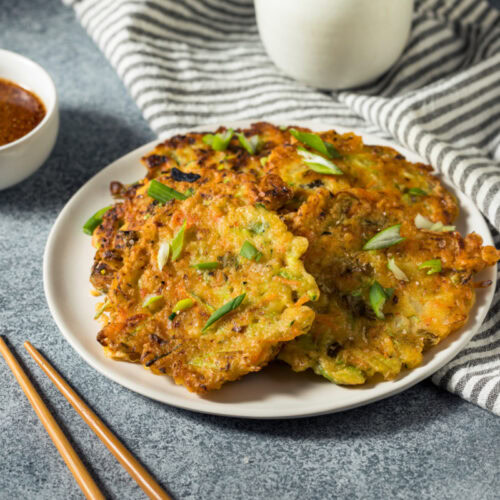
When I bite into a freshly made Korean vegetable pancake, the first thing I notice is that mix of crispy and soft—just the way I like it.
The outside is crunchy enough to crackle under my fork, but inside, it stays soft and a bit chewy.
That chewy center is honestly what makes this dish such a classic Korean comfort food for me.
Every bite has that contrast: golden edges, pillowy middle, and all those veggies tucked in.
Flavor-wise, it’s on the savory side, but not too heavy.
There’s a gentle sweetness from the veggies, and the green onion sneaks in with a little sharpness that cuts through everything else.
I like that the wheat flavor isn’t too strong; it lets the vegetables shine instead of taking over.
Now, dipping these pancakes in the soy-based sauce? That’s where the magic happens.
The sauce brings in some tang, salt, and a tiny kick of heat—kind of wakes up the whole thing.
Honestly, I could eat them plain, but the sauce just makes every bite a little more interesting.
These pancakes have their own vibe compared to other Asian-style recipes.
They’re a bit more filling and have a sturdier texture, so you don’t feel like you’re just snacking.
I totally get why they’re such a hit as Korean street food—they’re satisfying, full of flavor, and you can eat them standing up if you want.
They’re best hot off the pan, but honestly, I don’t mind them at room temp either.