Homemade Pork Gyoza Recipe
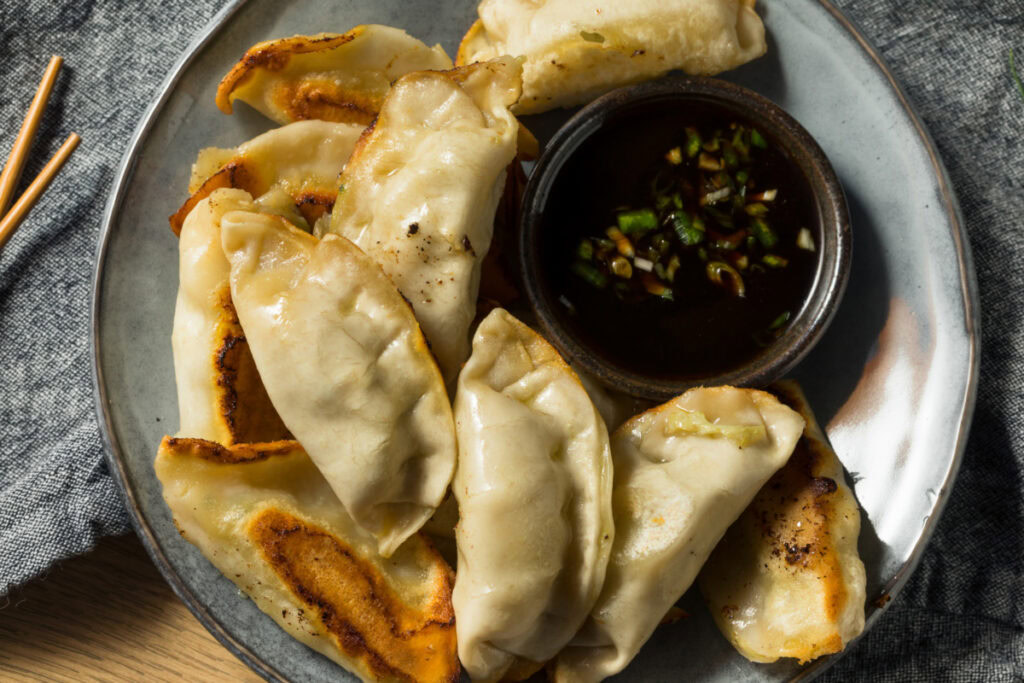
Gyoza are honestly one of my favorite Japanese foods to make from scratch. Homemade pork gyoza just hit different—you get to tweak the filling, and those crispy bottoms? So satisfying.
These pan-fried dumplings have a juicy pork center tucked inside thin wrappers. Once you get the hang of folding them, they’re surprisingly doable.
I actually learned how to make gyoza by watching my friend’s mom in her kitchen. Ever since, I’ve been kind of obsessed.
Getting that balance—crispy on the bottom, soft and steamed on top—is the trickiest part but also the most fun. You don’t need anything fancy to get started, just some basic stuff and a good pan.
Equipment
You really don’t need much to make gyoza at home. Most folks have the basics already.
For the filling and assembly:
- Large mixing bowl for mixing everything together
- Sharp knife and cutting board
- Small bowl of water (helps seal the dumplings)
- Clean kitchen towel or damp paper towels to cover store-bought dumpling wrappers
- Large plate or tray to set the finished gyoza on
For cooking:
- Large non-stick skillet or frying pan with a lid
- Measuring spoons for the vegetable oil
- Spatula or tongs for flipping
- Small measuring cup for a splash of water
A non-stick pan is my go-to since it keeps the gyoza from sticking. The lid is key for steaming them after frying.
If you want to save yourself some hassle, keep your dumpling wrappers under a damp towel. They dry out so fast and then they’re impossible to seal.
A little bowl of water nearby is handy. Just dip your finger in and run it around the edge before folding.
Honestly, you don’t need a fancy gyoza press. Folding by hand works just fine.
Ingredients
Making gyoza at home is all about the filling. The combo of pork and veggies is just so good.
For the gyoza filling, you’ll need:
- 1 pound ground pork
- 2 cups green cabbage, finely chopped
- 3 cloves garlic, minced
- 1 tablespoon fresh ginger, grated
- 3 scallions, finely chopped
- 2 tablespoons chives, chopped
- 2 tablespoons soy sauce
- 1 tablespoon sake
- 1 tablespoon mirin
- 1 tablespoon toasted sesame oil
- 1/4 teaspoon white pepper
- 1/2 teaspoon salt
For wrapping and cooking:
- 30-40 gyoza wrappers (sometimes called dumpling wrappers)
- Vegetable oil for frying
- Water for steaming
I always go with ground pork—it stays juicy and doesn’t dry out. The cabbage adds crunch and keeps things from getting too heavy.
Fresh ginger and garlic are a must for that classic flavor. I skip the dried stuff here. Toasted sesame oil really brings it all together.
You can usually find gyoza wrappers in the fridge or freezer section at Asian grocery stores. Regular dumpling wrappers work too. Just keep them covered with a damp towel while you work.
Instructions
First off, make your gyoza filling. Toss the ground pork, chopped cabbage, garlic, ginger, green onions, soy sauce, and sesame oil into a bowl. Mix it up until everything’s evenly combined.
Now, onto folding. Scoop about a tablespoon of filling into the center of each wrapper. Wet your finger and trace the edge of the wrapper to help it seal.
Fold the wrapper in half and make 5 or 6 little pleats along one side, pressing to seal it up tight.
Folding takes a little practice, but honestly, even the wonky ones taste awesome.
Once you’ve got your gyoza assembled, heat a large non-stick pan over medium-high. Pour in a tablespoon of oil and arrange the dumplings flat-side down.
Let them cook for 2-3 minutes until the bottoms are golden and crisp.
Pour in about 1/3 cup of water and slap on the lid right away. Let the gyoza steam for 6-7 minutes until the water’s gone.
Take off the lid and let them go for another minute or two to get those bottoms extra crispy.
Carefully lift them out with a spatula and serve immediately. I love dipping mine in a mix of soy sauce, rice vinegar, and a splash of chili oil.
Notes
You can freeze gyoza before or after cooking. I usually freeze them uncooked on a baking sheet, then toss them into a freezer bag once they’re solid.
They’ll last about three months like this.
When it’s time to cook, don’t thaw them—just add a minute or two to the cooking time. They keep their texture way better that way.
The dipping sauce really matters. I usually go with equal parts soy sauce and rice vinegar, then add a bit of sesame oil and chili oil if I want some kick.
Some folks like a little oyster sauce in there too, maybe half a teaspoon per serving.
Make sure your pan is hot enough before adding the gyoza. If it’s not, they’ll stick and tear, which is just annoying.
The pleats on top aren’t just for looks. They help the gyoza stand up in the pan and give you more crispy edges.
Honestly, don’t stress if your pleats aren’t perfect. They’ll still taste great.
I almost always double the recipe because they disappear fast. Leftover gyoza are best reheated in a hot pan with a splash of oil. The microwave just makes them soggy—wouldn’t recommend it.
If your filling feels too wet, add a bit more cabbage (squeezed dry). Too dry? A splash more soy sauce or sesame oil does the trick.

Equipment
- Large mixing bowl
- Knife and cutting board
- Small bowl of water
- Damp towel or paper towels
- Large plate or tray
- Large non-stick skillet with lid
- Spatula or tongs
- Measuring spoons and cups
Ingredients
- 1 pound ground pork
- 2 cups green cabbage finely chopped (squeeze dry if very wet)
- 3 cloves garlic minced
- 1 tablespoon fresh ginger grated
- 3 scallions finely chopped
- 2 tablespoons chives chopped
- 2 tablespoons soy sauce
- 1 tablespoon sake
- 1 tablespoon mirin
- 1 tablespoon toasted sesame oil
- 1/4 teaspoon white pepper
- 1/2 teaspoon salt
- 35 gyoza wrappers about 30–40 (dumpling wrappers), keep covered
- 2 tablespoons vegetable oil for frying (add more as needed)
- 1/3 cup water for steaming
- 3 tablespoons soy sauce for dipping sauce (optional)
- 3 tablespoons rice vinegar for dipping sauce (optional)
- 1 teaspoon chili oil optional, for dipping
- 1/2 teaspoon toasted sesame oil optional, for dipping
Instructions
- Make the filling: In a large bowl, combine ground pork, cabbage, garlic, ginger, scallions, chives, soy sauce, sake, mirin, sesame oil, white pepper, and salt. Mix well until evenly combined and slightly sticky.
- Set up for wrapping: Place a small bowl of water next to your wrappers and keep wrappers covered with a damp towel so they don’t dry out.
- Fill: Place 1 gyoza wrapper in your palm and add about 1 tablespoon filling to the center (don’t overfill).
- Seal and pleat: Wet the edge of the wrapper with water. Fold in half. Create 5–6 pleats along the top edge, pressing firmly to seal. Set finished gyoza on a tray and keep covered.
- Pan-fry: Heat a large non-stick skillet over medium-high. Add about 1 tablespoon oil and arrange gyoza flat-side down in a single layer. Cook 2–3 minutes until bottoms are golden and crisp.
- Steam: Carefully add about 1/3 cup water and immediately cover with a lid. Steam 6–7 minutes, until water evaporates and filling is cooked through.
- Crisp and serve: Remove the lid and cook 1–2 minutes more to re-crisp the bottoms. Serve hot with dipping sauce (soy sauce + rice vinegar; add chili oil and/or a drop of sesame oil if you like).
Notes
Nutrition
Tasting Notes
Biting into these homemade pork gyoza, the first thing that hits me is the contrast in textures. The bottom gets this crispy, golden layer from the pan, while the top stays soft and a little steamy.
That pork filling? Super juicy and packed with flavor. I notice the garlic and ginger right away, plus just a bit of sesame oil sneaking through.
Cabbage adds a good crunch and keeps everything from feeling too heavy. It’s a nice balance—nothing overwhelms, nothing gets lost.
Honestly, these dumplings remind me a lot of the potstickers you find at a good restaurant. The wrapper is thin but holds together well, with a bit of chew that I look for.
Now, the dipping sauce is kind of a must. I usually go for soy sauce, rice vinegar, and a splash of chili oil. That tangy, salty combo just works so well with the pork.
I love how balanced these are. The meat isn’t greasy or bland, and the veggies keep things fresh without taking over the show.
Each gyoza has just enough filling so you get both the wrapper and the good stuff inside with every bite. That’s important, right?
Honestly, these are at their best when they’re hot and fresh out of the pan. The crispiness on the bottom only lasts maybe 10-15 minutes, so I never wait around.
Sure, you can reheat leftovers, but let’s be real—nothing beats that straight-from-the-pan crunch.