Crispy Fried Calamari Recipe
Crispy fried calamari is one of those restaurant appetizers that looks tricky, but honestly, it’s not hard once you get the hang of it. The trick? Keep your squid dry, use a light hand with the coating, and fry at just the right temp.
I’ve tried this recipe a bunch of times to get it dialed in. That golden, crunchy outside with the tender squid inside—yeah, it’s hard to beat.
Whether you’re throwing a get-together or just craving a salty snack, homemade calamari is way better than the frozen kind. Plus, you know exactly what’s in it.
So, here’s how I do it. I’ll show you what gear makes it easiest, which ingredients I like, and the step-by-step for getting that crispy bite every single time.
Equipment
You don’t need fancy stuff to make fried calamari at home. I just use regular kitchen tools most folks already have.
Here’s what I grab:
- Heavy-bottomed pot or deep fryer – Something at least 3-4 inches deep for frying
- Cooking thermometer – You really need this to keep the oil at 350-375°F
- Slotted spoon or spider strainer – Makes fishing out the calamari way safer
- Paper towels – For draining off the oil
- Large mixing bowls – I use two for breading
- Tongs – Handy for moving the rings around
- Plate or baking sheet – To hold the coated calamari before it hits the oil
The thermometer is honestly non-negotiable for me. I clip it to the side of my pot so I can keep an eye on the oil. If the oil’s too hot, the outside burns before the squid’s ready.
If it’s too cool, you end up with greasy, limp calamari. Not great.
I like a heavy pot better than a thin one. It keeps the heat steady and helps the oil stay at the right temp.
A deep fryer works too, if you’ve got one. Most of them have their own temp controls, so you might not even need the thermometer.
Ingredients
Fried calamari at home doesn’t need a long list of stuff. The main thing is good squid tubes, which I usually find fresh or frozen at the grocery store.
For the rings, I use:
- 1 pound squid tubes (cleaned, sliced into ½-inch rings)
- 1 cup all-purpose flour
- ½ cup cornstarch
- 1 teaspoon salt
- ½ teaspoon black pepper
- ½ teaspoon garlic powder
- ½ teaspoon paprika
- Vegetable oil for frying (about 4 cups)
The mix of flour and cornstarch is my go-to for a crispier bite. Cornstarch keeps the coating light and snappy.
I don’t go wild with the spices. Just enough to let the squid flavor come through, but you can always tweak it.
Make sure you’ve got enough oil to cover the squid rings. I go with vegetable or canola oil because they don’t taste like much and can handle high heat.
If you’re using frozen squid, let it thaw out in the fridge overnight. Then pat it dry—seriously, don’t skip this.
Extra moisture is the enemy of crispiness.
Instructions
First thing, drain the calamari rings and dry them well with paper towels. This makes a huge difference for the crunch.
Set up your breading station with two shallow bowls. In one, mix the flour, salt, pepper, and garlic powder. In the other, beat a couple eggs with a splash of milk.
Here’s how I fry them:
- Heat 2-3 inches of oil in a deep pot to 375°F
- Keep checking the temp with your thermometer
- Dip each ring in the flour mixture, shake off the extra
- Then into the egg mixture
- Back into the flour mix for a double coat
- Carefully drop the rings into the hot oil
- Fry for about 2-3 minutes until they’re golden and crispy
- Scoop them out with a slotted spoon
- Lay them on paper towels to drain
- While they’re still hot, sprinkle with salt
Don’t crowd the pot. If you do, the oil cools down and you get soggy calamari. I stick to about 6-8 rings per batch.
Let the oil come back up to temp before starting the next round. That way, every batch turns out just as crispy as the last.
I always serve fried calamari right away while it’s still piping hot. It starts to lose that crunch as it cools.
Notes
I’m a stickler for patting the calamari dry before coating it. Any leftover water makes the coating soggy, and that’s just not what you want.
Oil temp is everything. I keep it between 350°F and 375°F. Too cool, and the calamari gets greasy. Too hot, and it burns outside before cooking inside.
Small batches are key. I don’t try to fry the whole batch at once—just a handful at a time so the oil stays hot.
Calamari cooks fast, almost surprisingly so. Two to three minutes is all you need. Any longer, and it turns rubbery.
Fried calamari is best straight from the pot, still crispy and hot. If you let it sit too long, the coating softens up.
If I have leftovers (which is rare), I keep them in the fridge for up to two days. I reheat them in a 400°F oven for about 5-7 minutes. The microwave just makes them sad and soggy, so I skip that.
Sometimes I toss in a pinch of cayenne or smoked paprika to the flour for a little kick. It’s not overwhelming, just a nudge of heat.
Fresh or frozen calamari both work. If I’m using frozen, I thaw it in the fridge and drain it well before drying and slicing.

Equipment
- Heavy-bottomed pot or deep fryer
- Cooking thermometer
- Slotted spoon or spider strainer
- Tongs
- large mixing bowls
- Plate or baking sheet
- Paper towels
Ingredients
- 1 lb squid tubes cleaned, sliced into 1/2-inch rings (pat very dry)
- 1 cup all-purpose flour
- 1/2 cup cornstarch
- 1 tsp salt plus more for finishing
- 1/2 tsp black pepper
- 1/2 tsp garlic powder
- 1/2 tsp paprika
- 2 large eggs
- 2 tbsp milk or water
- 4 cups vegetable oil for frying (or enough for 2–3 inches depth)
- lemon wedges optional, for serving
Instructions
- Pat the calamari rings very dry with paper towels. Moisture makes the coating soggy and can cause splattering.
- Set up a breading station: In a bowl, whisk together the flour, cornstarch, salt, pepper, garlic powder, and paprika. In a second bowl, whisk the eggs with the milk.
- Pour oil into a heavy pot to a depth of 2–3 inches and heat to 375°F (190°C). Use a thermometer and keep the oil between 350–375°F while frying.
- Working with a few rings at a time, dredge calamari in the flour mixture and shake off excess. Dip into the egg mixture, then return to the flour mixture for a second coat.
- Fry in small batches (about 6–8 rings) for 2–3 minutes, turning as needed, until golden and crisp. Do not overcrowd the pot.
- Remove with a slotted spoon or spider and drain on paper towels. While hot, sprinkle with a pinch of salt. Let the oil return to temperature before the next batch.
- Serve immediately (best for crunch). Add lemon wedges on the side if you like.
Notes
Nutrition
Tasting Notes
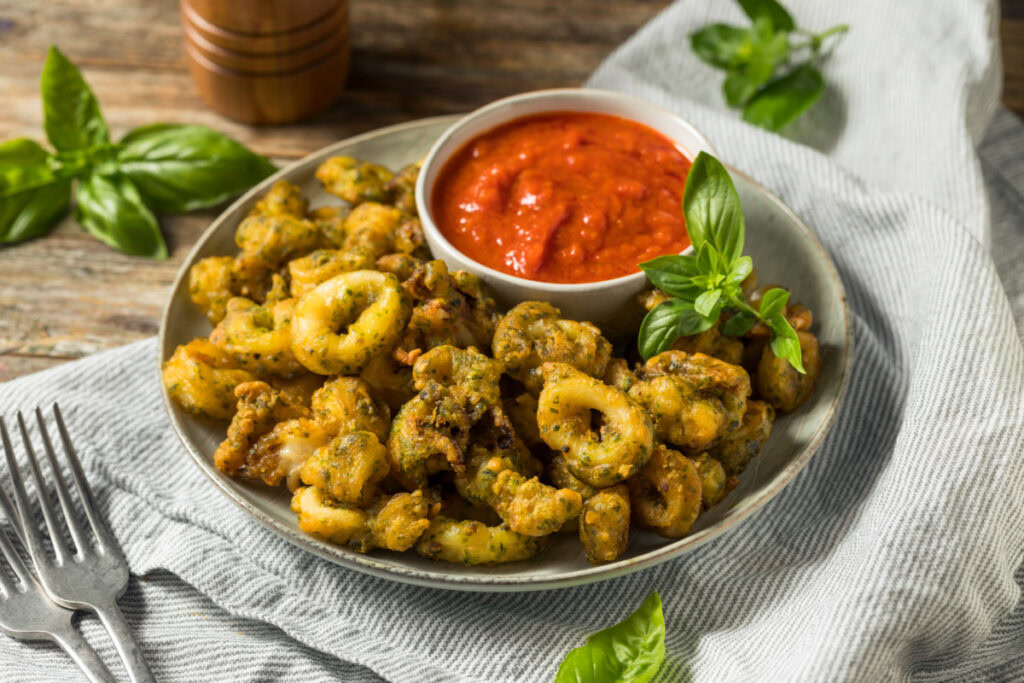
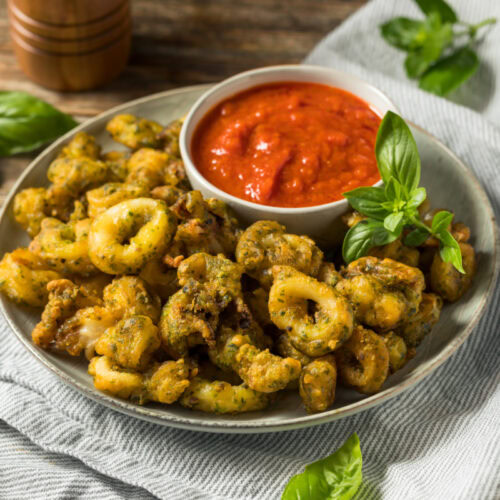
When I bite into crispy calamari cooked just right, the first thing that jumps out is that golden, crunchy coating. It shatters with every bite, staying light and never weighing things down.
I love how the breading isn’t greasy at all. That crispiness sets up a nice contrast with the inside.
The squid itself is what really counts. I always hope for calamari that’s soft, almost buttery, not chewy or rubbery. If it’s cooked properly—which honestly only takes seconds—the texture stays delicate.
The taste? It’s mild and a bit sweet, with a gentle ocean flavor that isn’t overwhelming. The breading brings a little salty, savory kick that works with the squid’s natural taste. I think any seasoning should add to the seafood, not cover it up.
Fried calamari has to be served hot—no question. As it cools, the crunch fades away. You really get the best of both worlds in those first few minutes: crispy outside, tender inside.
I like that good calamari feels light, even though it’s fried. It shouldn’t sit heavy or leave you regretting your choices. Each ring or tentacle should taste fresh, no weird fishy or ammonia smell. If it’s done right, the squid’s quality shines through the coating.
A squeeze of lemon over the top just wakes up the whole plate. That hit of acidity cuts through the fried bits and brings out the sweetness in the squid.