Cheese Pancakes Recipe
Cheese pancakes are these fluffy, savory little breakfast gems where you mix cheese right into the batter. I honestly love making them for lazy weekend mornings—they’re such a nice break from the usual sweet pancakes, and that cheesy flavor really comes through.
You can whip up a batch in about 20 minutes, and I’d bet you’ve already got most of the ingredients hanging out in your kitchen.
The first time I made these, I was just craving something a bit more filling than plain pancakes. The cheese melts into the batter as they cook, so you get these gooey pockets in every bite.
They’re really tasty on their own, but honestly, a spoonful of sour cream on top takes them up a notch.
Let me walk you through what you’ll need equipment-wise, the ingredient list, and the steps that work for me every time.
Equipment
I keep things pretty straightforward for cheese pancakes. No need for any fancy gadgets here.
Here’s what I grab:
- Large mixing bowl – for getting everything together
- Medium mixing bowl – just in case you want to separate wet and dry stuff
- Whisk or fork – either works for beating eggs and mixing
- Measuring cups and spoons – helps to keep things consistent
- Non-stick skillet or griddle – I like a 10 or 12-inch pan
- Spatula – the thinner and more flexible, the better for flipping
- Ladle or 1/4 cup measuring cup – makes portioning easy
Non-stick is key here. Cheese likes to stick, so trust me, don’t skip that.
A good spatula makes flipping way less stressful. I’ve broken a few pancakes with a stiff one—learn from my mistakes.
I like using a ladle because it keeps my pancakes the same size. Plus, it just feels more fun.
You probably have most of this already. If you’re missing something, the non-stick pan is the real must-have.
Ingredients
These cottage cheese pancakes only need a handful of pretty basic things. I love how unfussy this recipe is.
For the pancakes, you’ll need:
- 1 cup cottage cheese (full-fat gives the best texture)
- 2 large eggs
- 1/2 cup all-purpose flour
- 1 tablespoon granulated sugar
- 1/2 teaspoon baking powder
- 1/4 teaspoon salt
- 1/2 teaspoon vanilla extract
- 2 tablespoons melted butter (plus a bit more for the pan)
The cottage cheese is what makes these pancakes special. It adds protein and gives them a texture that’s both light and satisfying.
Full-fat cottage cheese is my go-to. The extra richness makes the pancakes more tender and, honestly, just better.
Small or large curd cottage cheese both work fine, so don’t stress about that detail.
Fresh eggs are important—they help everything hold together and keep things fluffy. Just double-check your baking powder isn’t ancient, or your pancakes might end up flat.
Butter gives the batter flavor, and you’ll want a little more for the pan so nothing sticks.
Instructions
I start by whisking together the cottage cheese, eggs, and vanilla extract in a big bowl. You want it to look mostly smooth, but don’t worry if there are a few lumps.
Next, I add in the flour, sugar, baking powder, and salt. I stir gently, just until everything’s mixed. If you overdo it, the pancakes won’t be as light.
Let the batter sit for about 5 minutes. While it rests, I heat up my non-stick pan or griddle over medium heat and melt a small pat of butter to coat the surface.
Once the pan’s ready, I pour about 1/4 cup of batter for each pancake. Here’s my usual routine:
- Wait for bubbles to show up on top and for the edges to look set (usually 2-3 minutes)
- Flip with a spatula—carefully!
- Cook another 2 minutes or so, until golden on the other side
- Move to a plate and keep warm
I just keep going with the rest of the batter, adding more butter to the pan when I need it. Try not to press down on the pancakes while they’re cooking—it keeps them fluffier.
Serve them up right away while they’re warm. They’re honestly best fresh, especially with your favorite toppings.
Notes
Storing these pancakes is easy. I pop any extras in the fridge for up to three days, sealed up tight. To reheat, I just use the microwave for about 20 seconds or warm them in a skillet.
If you want to make a big batch, you can freeze them too. I stick parchment paper between each pancake so they don’t glue themselves together. They’ll keep for around two months in the freezer. Just thaw overnight in the fridge before reheating.
The batter might look a bit thin at first—don’t worry, that’s how it should be. Resist the urge to add more flour or you’ll end up with dense pancakes. Letting the batter rest helps.
Cottage cheese gives these pancakes a thicker, more textured bite compared to ricotta. Ricotta pancakes turn out lighter and smoother, but I’m partial to the cottage cheese version.
Wait until you see bubbles on top and the edges look set before flipping. If you flip too soon, they’ll fall apart.
If you notice they’re browning too fast, just turn the heat down a bit. I’ve burned a few by being impatient—medium-low is usually safest.
A little fresh lemon zest is really good in the batter—about a teaspoon is enough. Or you can add a splash of vanilla if you’re feeling it.

Equipment
- Large mixing bowl
- Whisk
- Measuring cups and spoons
- Non-stick skillet or griddle
- Spatula
- Ladle or 1/4-cup measure
Ingredients
- 1 cup cottage cheese full-fat preferred; small or large curd
- 2 large eggs
- 1/2 cup all-purpose flour
- 1 tbsp granulated sugar
- 1/2 tsp baking powder
- 1/4 tsp salt
- 1/2 tsp vanilla extract
- 2 tbsp butter melted, for batter
- 1 tbsp butter for greasing the pan, as needed
Instructions
- In a large bowl, whisk together the cottage cheese, eggs, and vanilla until mostly smooth (a few small curds are fine).
- Add the flour, sugar, baking powder, and salt. Stir gently just until combined—do not overmix.
- Stir in the melted butter. Let the batter rest for 5 minutes so it thickens slightly.
- Heat a non-stick skillet or griddle over medium to medium-low heat. Lightly butter the surface.
- Scoop about 1/4 cup batter per pancake onto the hot pan. Cook 2–3 minutes, until bubbles form on top and the edges look set.
- Flip carefully and cook 1–2 minutes more, until golden and cooked through. Transfer to a plate and keep warm.
- Repeat with the remaining batter, adding a little more butter to the pan as needed. Serve warm with sweet or savory toppings.
Notes
Nutrition
Tasting Notes
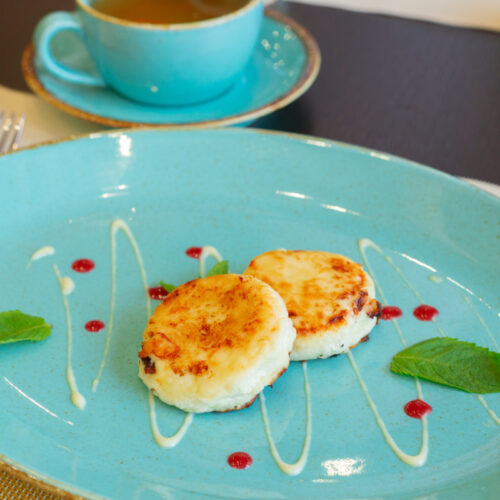
Taking that first bite of these cheese pancakes, there’s this gentle tang from the cheese that hits right away. The texture? Super soft and fluffy—almost like biting into a cloud, if that’s not too dramatic.
They’re not overly sweet, which I actually love because it means you can eat them for breakfast or even as a savory dish. The cheese kind of hides in little creamy pockets throughout, making every bite a little different.
There’s a mild saltiness going on, and it really works, especially if you throw on some toppings. When the edges get crispy—if you cook them just right—it adds this nice contrast to the soft middle.
Depending on my mood, I switch up the toppings. If I’m craving something sweet, I’ll go with maple syrup, fresh berries, or maybe a bit of powdered sugar. The combo of sweet and cheesy is honestly more interesting than you’d expect.
Other days, I lean savory—think sour cream, chives, or even a little smoked salmon. A drizzle of honey? Weirdly good. The cheese flavor is mellow enough that it doesn’t take over, so you can just have fun with it.
Even after they’ve cooled down a bit, these pancakes don’t dry out. They’re definitely at their best when they’re warm and the cheese is still a little gooey. Honestly, they taste richer and more filling than your typical pancakes—makes them kind of hard to stop eating.