Spicy Harissa Sauce Recipe
Harissa is a bold North African chili paste that packs real heat and depth into just about anything you put it on. Making your own harissa sauce at home? Honestly, it beats the store-bought stuff every time—so much fresher and way more vibrant.
I’ve found harissa is crazy versatile. Slather it on grilled chicken, swirl it into dips, or swap it in wherever you’d normally reach for hot sauce or something smoky like chipotle.
Most folks know the classic red harissa, but if you’re feeling adventurous, you can try a green version for a totally different vibe.
Making it from scratch sounds fancy, but it’s honestly not hard at all—just a handful of ingredients and a blender or food processor. The flavors come together fast, and you end up with a homemade sauce that makes everything taste a little more special.
Let’s get into it—here’s how I make this harissa paste for chicken, veggies, eggs, you name it.
Equipment
You don’t need a bunch of fancy gadgets for harissa. I just use stuff I already have in my kitchen.
Here’s what I grab:
- Skillet or frying pan – Toasting the dried peppers and spices is key
- Blender or food processor – To blitz everything into a paste
- Measuring spoons and cups – For getting the amounts right
- Small bowl – For soaking the dried peppers
- Rubber spatula – Scraping down the sides as you blend
- Glass jar with lid – For storing the finished sauce
A high-powered blender makes the paste super smooth, but a regular food processor totally gets the job done too.
Toasting the spices and peppers in a dry skillet (no oil needed) really wakes up their flavors. Don’t skip this step—it makes a difference.
For storage, glass jars are my go-to. They don’t stain or hold onto the pepper smell like plastic does. Mason jars are perfect and keep the sauce tasting fresh for a couple of weeks.
If you’re feeling old-school, a mortar and pestle works, but it’s a workout. The texture ends up chunkier, which honestly, some people like better.
Ingredients
Here’s my usual lineup for a bold, tasty harissa. You can play around with the heat to suit your taste buds.
For the base:
- 6-8 dried red chilies (New Mexico chiles are my favorite for their flavor)
- 3-4 dried chipotle peppers (optional, but they add a good smoky kick)
- 4 garlic cloves, peeled
- 2 tablespoons tomato paste
- 1 roasted red bell pepper (or a few strips of jarred roasted red pepper)
- 3 tablespoons extra virgin olive oil, plus more for storing
For the spices:
- 1 tablespoon cumin seeds (or 2 teaspoons ground)
- 1 tablespoon coriander seeds (or 2 teaspoons ground)
- 1 teaspoon caraway seeds
- 2 teaspoons smoked paprika
- ½ teaspoon cayenne pepper (or less if you’re not into spicy)
Other stuff:
- 2 tablespoons fresh lemon juice
- 1 teaspoon salt
- ¼ cup water (for blending)
Whole spices like cumin and coriander give the best flavor, but if you’re in a pinch, ground works. No chipotle? Just stick with the regular dried chilies.
I always go for extra virgin olive oil—it keeps things smooth and brings out the flavor.
Instructions
Here’s how I make my homemade harissa, step by step. It’s not fussy, I promise.
First, get your dried chilies ready. Snip off the stems and shake out the seeds. Throw them in a bowl and pour hot water over them. Let them hang out for 20-30 minutes so they get nice and soft.
Once they’ve softened up, drain them. Pop the chilies into your blender or food processor. I usually save a bit of the soaking water in case I need to thin the paste later.
Now add the rest of your ingredients. Garlic, spices, olive oil, tomato paste, salt—everything goes in. Blend it all up until it’s as smooth as you like.
I stop to scrape the sides down a few times so nothing gets left out. If it’s too thick, add a splash of the soaking water and blend again.
Give it a taste and tweak as needed. More salt? A drizzle more olive oil? Maybe a pinch more cayenne if you want it hotter. Make it yours.
Scoop the finished harissa into a clean glass jar. I pour a little olive oil over the top to help it last longer in the fridge.
Notes
I always taste as I go so I can dial in the heat and salt just right. If it ends up too fiery, a little extra olive oil or lemon juice takes the edge off.
Letting the sauce chill in the fridge for a few hours really helps the flavors meld together. It’s even better the next day.
For storage, I keep it in a glass jar with a tight lid and pour a thin layer of olive oil on top before sealing. That little oil cap keeps it fresh.
Harissa stays good in the fridge for up to two weeks, at least in my experience. Airtight containers are key.
You can freeze it too—just spoon it into an ice cube tray, freeze, then toss the cubes in a freezer bag. They’ll last a few months and you can just grab a cube when you need a bit of spice.
If it thickens up in the fridge, just stir in a little more olive oil or water. Easy fix.
The heat level really depends on your peppers. Fresher chilies = spicier sauce. If you use older dried peppers, it might be milder.
I usually double the batch because it keeps so well. Having harissa on hand means I can toss it into basically anything for an instant upgrade.

Equipment
- Skillet or frying pan
- Blender or food processor
- Measuring cups and spoons
- Small bowl (for soaking)
- rubber spatula
- Glass jar with lid
Ingredients
- 7 dried red chilies (New Mexico chiles or similar) stemmed, seeded
- 3 dried chipotle peppers optional; adds smoke
- 4 cloves garlic peeled
- 2 tbsp tomato paste
- 1 roasted red bell pepper or 1/2 cup jarred roasted red pepper strips, drained
- 3 tbsp extra virgin olive oil plus more to cover for storage (optional)
- 1 tbsp cumin seeds or 2 tsp ground cumin
- 1 tbsp coriander seeds or 2 tsp ground coriander
- 1 tsp caraway seeds
- 2 tsp smoked paprika
- 0.5 tsp cayenne pepper use less for milder heat
- 2 tbsp fresh lemon juice
- 1 tsp salt plus more to taste
- 0.25 cup water for blending (or use reserved soaking water to thin)
Instructions
- Prep the dried chilies: snip off stems, shake out seeds, and place chilies (and chipotles, if using) in a small bowl. Cover with very hot water and soak until softened, about 20–25 minutes.
- Toast the spices: in a dry skillet over medium heat, toast cumin seeds, coriander seeds, and caraway seeds until fragrant, 1–2 minutes, stirring constantly. Remove from heat to cool slightly.
- Drain the chilies (reserve a splash of soaking water if you’d like to thin later). Add softened chilies to a blender or food processor.
- Add garlic, toasted spices (or ground substitutes), smoked paprika, cayenne, tomato paste, roasted red pepper, lemon juice, salt, olive oil, and water. Blend, scraping down the sides as needed, until a thick paste forms.
- Adjust consistency and seasoning: blend in a little reserved soaking water (or more water/olive oil) if too thick. Taste and add more salt, lemon, or cayenne as desired.
- Store: spoon harissa into a clean glass jar. For longer fridge life, smooth the top and cover with a thin layer of olive oil. Refrigerate and use as needed.
Notes
Heat varies by chilies: older dried peppers are usually milder; adjust cayenne accordingly.
Storage: keep refrigerated in a jar; a thin olive-oil cap helps prevent drying and can extend freshness.
Freezing: portion into an ice cube tray, freeze, then store cubes in a freezer bag for quick use.
Nutrition
Tasting Notes
When I first tried this spicy harissa sauce, the heat jumped out at me right away. It’s bold—definitely one of those condiments that wakes up your taste buds.
The flavor isn’t just about the spice, though. I get those smoky harissa vibes from the roasted peppers and cumin, which linger in the background.
There’s this earthy warmth from the chili peppers, pretty classic for a North African chili paste. The garlic brings a sharp little kick, and the lemon juice brightens things up just enough to keep it from being too heavy.
Caraway and coriander seeds peek through, giving that authentic harissa taste I always look for. It’s not just about bringing the heat—there’s more going on.
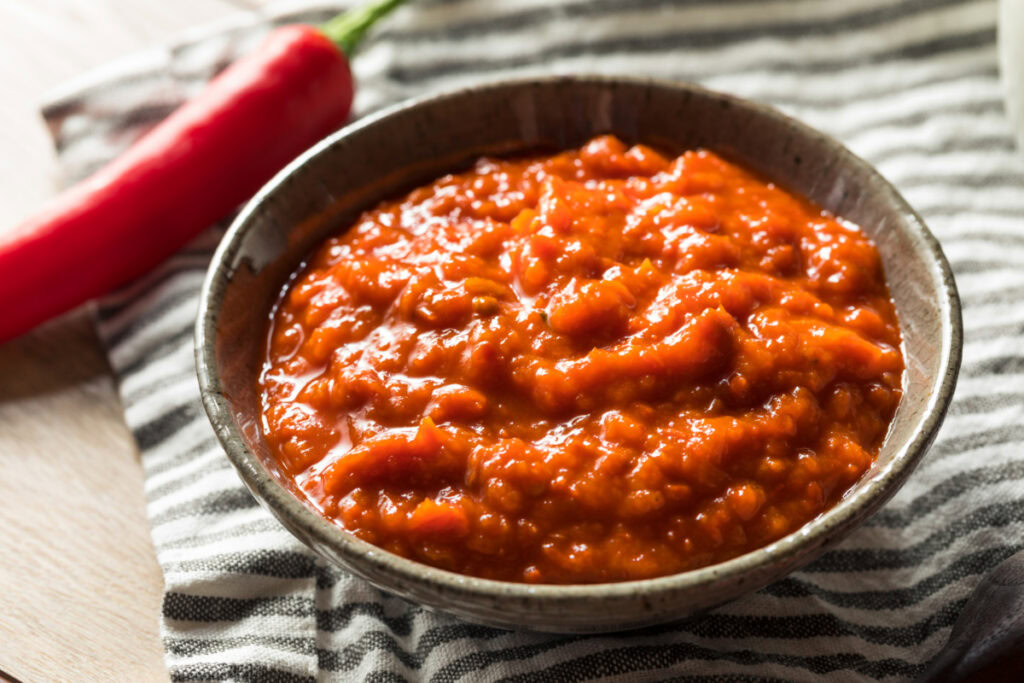
The texture? Definitely thick and paste-like, kind of like tomato paste, but you can see all the spices in there. Whenever I spread it on bread or toss it into a dish, it sticks nicely and gives everything a deep red color.
Honestly, there are a bunch of ways to use harissa. I like it as a marinade for chicken or fish, and it’s pretty great stirred into yogurt for a dip.
Sometimes I’ll add a spoonful to soups, stews, or grain bowls when I need a little something extra. It’s just easy to work with.
You can play around with the spicy harissa level by using more or fewer chili peppers. My batch lands somewhere around medium-high heat—it builds up, but it doesn’t bulldoze everything else on your plate.