Korean Meatballs in Sweet and Sour Sauce Recipe
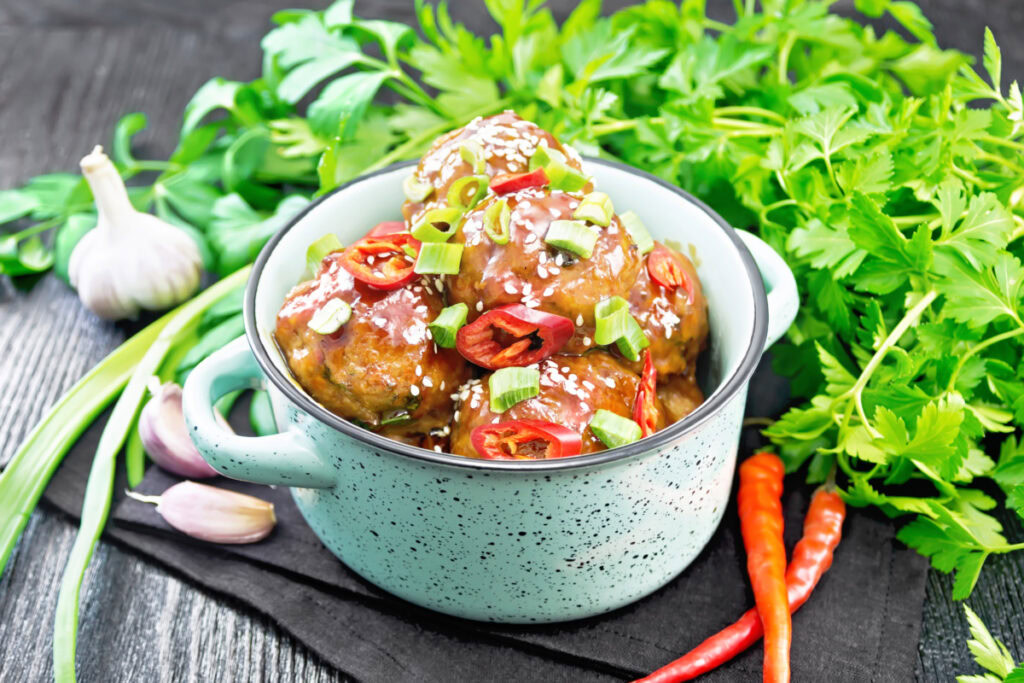
Korean meatballs in sweet and sour sauce combine juicy, seasoned meat with a tangy glaze that just wakes up your taste buds.
Honestly, these Asian meatballs are one of those dishes I keep coming back to—they’re simple to make and always get a good reaction at dinner.
Here’s how I whip up Korean meatballs from scratch with basic ingredients and a homemade sweet and sour sauce that’s honestly way better than anything in a bottle.
The meatballs stay juicy inside, and that sauce? It’s got just the right kick of sweet and tang.
I’ll walk you through everything: what you’ll need, how to mix and shape the meatballs, and how to get that sauce just right.
I’ll even throw in some personal thoughts so you know what you’re getting into with this dish.
Equipment
I like to keep things simple for this recipe. No need for fancy Korean gadgets—just regular kitchen stuff.
Here’s what I usually grab:
- Large mixing bowl for the meatball mixture.
- Baking sheet lined with parchment paper.
- Medium saucepan or skillet for the sauce.
- Whisk for stirring up the sauce.
- Measuring cups and spoons to keep things on track.
- Wooden spoon or spatula for mixing.
- Small bowl for the cornstarch slurry.
I prefer baking these meatballs. A regular baking sheet does the trick. If you want to pan-fry instead, just grab a big skillet that’ll hold all the meatballs.
The saucepan needs to be roomy enough for your sauce and the meatballs when it’s time to toss everything together. I use a medium one, maybe 2-3 quarts.
You don’t need a rice cooker or anything fancy for this. A basic pot works if you’re serving rice on the side. The best part? You get all those classic flavors with just everyday tools.
Ingredients
I’ve split the ingredients into two easy lists. One’s for the meatballs, the other’s for the sauce.
For the Meatballs:
- 1 pound ground beef (or a mix of beef and pork)
- 1/2 cup panko breadcrumbs
- 1 large egg
- 3 cloves garlic, minced
- 1 tablespoon fresh ginger, grated
- 2 tablespoons soy sauce
- 1 tablespoon gochujang paste (Korean chili paste)
- 1 teaspoon toasted sesame oil
- 1/4 teaspoon black pepper
- 2 green onions, finely chopped
For the Sweet and Sour Sauce:
- 1/2 cup ketchup
- 1/3 cup rice vinegar
- 1/4 cup soy sauce
- 1/4 cup honey
- 2 tablespoons mirin (sweet rice wine)
- 1 tablespoon gochujang paste
- 2 cloves garlic, minced
- 1 teaspoon fresh ginger, grated
- 1 tablespoon cornstarch
- 2 tablespoons water
The panko keeps these Korean meatballs light and soft. I’m a big fan of gochujang—it brings that signature heat and flavor you want.
Mixing rice vinegar, soy sauce, and mirin gives the sauce a sweet-tangy vibe that just works.
Using garlic and ginger in both the meatballs and the sauce ties everything together. It’s fresh and just a little punchy.
Instructions
First thing, preheat your oven to 400°F and line a baking sheet with parchment. This makes cleanup easier and keeps the meatballs from sticking.
For the meatballs:
- Toss ground beef, garlic, ginger, panko, egg, soy sauce, sesame oil, black pepper, and green onions into a big bowl.
- Mix it all up with your hands until it’s just combined—don’t overdo it.
- Roll into 1.5-inch balls and space them out on your baking sheet.
- Bake for about 18-20 minutes, until they’re cooked through and start to brown.
For the sweet and sour sauce:
- Whisk together ketchup, rice vinegar, soy sauce, honey, mirin, gochujang, garlic, and ginger in a saucepan.
- Bring to a simmer over medium heat, stirring now and then.
- Mix cornstarch and water in a small bowl to make a slurry.
- Stir the slurry into the sauce and let it cook for 3-4 minutes, until it thickens up and gets glossy.
To finish:
- Add the meatballs to the saucepan.
- Gently toss so every meatball gets coated in the sauce.
- Let them simmer together for a couple of minutes so the flavors meld.
The trick here is not to overmix the meat—keeps the meatballs soft and not tough. Serve them hot, sprinkled with sesame seeds and green onions if you’re feeling fancy.
Notes
I love these meatballs over coconut rice. It’s got this subtle sweetness that plays off the sauce in a really nice way.
If you like, plain steamed rice is also a solid choice. It soaks up all that sauce.
You can prep the meatballs ahead and stash them in the fridge for a day or two before baking. Super handy for busy nights or if you’ve got people coming over.
The sauce is easy to tweak. Want it sweeter? Add a bit more honey. Need more tang? Splash in extra vinegar.
If the sauce feels too thin, just mix up a little more cornstarch with cold water and stir it in. Let it bubble for another minute, and it’ll thicken right up.
Leftovers keep well in the fridge for a few days. Warm them up gently on the stove or in the microwave.
Sometimes I throw in bell peppers or pineapple chunks with the sauce. It adds color and a little extra bite—plus, who doesn’t like more veggies?
These meatballs freeze well for a few months. Let them cool, pack them up in a freezer-safe container, and you’re good. Thaw in the fridge before reheating.

Equipment
- Large mixing bowl
- Baking sheet
- Parchment paper
- Medium saucepan or skillet
- Whisk
- Measuring cups and spoons
- Wooden spoon or spatula
- Small bowl (for slurry)
Ingredients
- 1 lb ground beef or a mix of beef and pork
- 0.5 cup panko breadcrumbs
- 1 large egg
- 3 cloves garlic minced
- 1 tbsp fresh ginger grated
- 2 tbsp soy sauce
- 1 tbsp gochujang paste Korean chili paste
- 1 tsp toasted sesame oil
- 0.25 tsp black pepper
- 2 green onions finely chopped
- 0.5 cup ketchup
- 0.33 cup rice vinegar
- 0.25 cup soy sauce for the sauce
- 0.25 cup honey
- 2 tbsp mirin sweet rice wine
- 1 tbsp gochujang paste
- 2 cloves garlic minced (for sauce)
- 1 tsp fresh ginger grated (for sauce)
- 1 tbsp cornstarch
- 2 tbsp water for slurry
Instructions
- Preheat oven to 400°F (200°C). Line a baking sheet with parchment paper.
- Make the meatball mixture: In a large bowl, combine ground beef, panko, egg, minced garlic, grated ginger, soy sauce, gochujang, sesame oil, black pepper, and chopped green onions. Mix with your hands just until combined (don’t overmix).
- Shape the meatballs into 1½-inch balls (about 14–18 meatballs) and place them evenly spaced on the prepared baking sheet.
- Bake for 18–20 minutes, until cooked through and lightly browned.
- While the meatballs bake, start the sauce: In a medium saucepan over medium heat, whisk together ketchup, rice vinegar, soy sauce, honey, mirin, gochujang, minced garlic, and grated ginger. Bring to a gentle simmer, stirring occasionally.
- Make a slurry by mixing cornstarch and water in a small bowl until smooth. Whisk the slurry into the simmering sauce and cook 3–4 minutes, until thick and glossy.
- Add baked meatballs to the sauce and gently toss to coat. Simmer together 2 minutes so the flavors meld.
- Serve hot over steamed rice. Optional: garnish with sesame seeds and extra sliced green onions.
Notes
Nutrition
Tasting Notes
When I take my first bite of these Korean meatballs, the sweet and sour sauce jumps out right away. It’s got this lively balance—tangy and sweet, coating every bite.
The meatballs are tender and juicy inside. There’s a little crisp from the pan-fry, and honestly, I love how the garlic, ginger, and sesame oil come through.
The sauce is glossy and thick, but not heavy. It kind of reminds me of those classic Korean glazes—sweet, tangy, a little sticky.
Rice vinegar gives it a sharp kick that brightens up the whole thing. It’s a nice way to cut through the richness of the meat, you know?
I pick up on the soy sauce and a gentle heat from the gochugaru. The brown sugar and honey add sweetness, but nothing cloying.
These flavors just work together, none of them shouting over the others. It’s a pretty good balance, if you ask me.
When I pile these into a bowl over rice, the sauce seeps into the grains. That rice really helps mellow out the bold flavors.
Tossing in some fresh veggies—cucumber or carrots—adds a crisp crunch. It’s a nice contrast with the soft meatballs.
The aroma is just so inviting, kind of that unmistakable Korean mix of savory and sweet. Each meatball stays moist, even after sitting in the sauce for a bit.
Actually, I think the flavors get even better as they hang out together.