Italian Lasagna Recipe
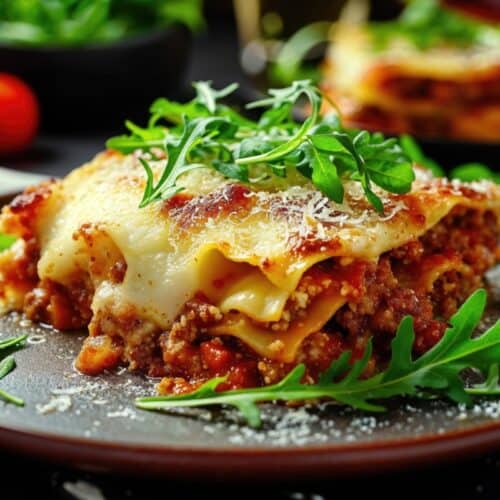
Italian lasagna is one of those comfort foods that just makes you feel at home. You get layers of tender pasta, a rich bolognese sauce, seasoned minced beef, creamy béchamel, and plenty of melty cheese.
I’ve messed around with this recipe for years, tweaking things here and there. Now, it’s finally at that point where I can say, yeah, this is the one I always come back to.
This is a real-deal Italian lasagna—slow-cooked meat sauce, pasta layered just right, and a taste that honestly reminds me of those little trattorias in Italy.
Making it from scratch sounds like a lot, but it’s not as tricky as people think. The secret is taking your time with the bolognese and letting all the layers do their thing together.
I’ll break down the kitchen gear you’ll need, the ingredients that matter, and each step so you don’t get lost halfway through.
Cooking for your family? Friends coming over? This lasagna is the kind of dish that gets everyone at the table talking.
I’ve tossed in a few notes and some tips for tasting, so you know what you’re looking for when you pull that bubbling pan out of the oven.
Equipment
You don’t need a fancy kitchen for lasagna, just a few basics. Here’s what I always grab before I start.
For the Bolognese Sauce:
- A big, heavy-bottomed pot or Dutch oven (something that holds at least 5 quarts)
- A wooden spoon for stirring
- Sharp knife and a cutting board
- Measuring cups and spoons
For the Béchamel Sauce:
- Medium saucepan (2 or 3 quarts is fine)
- Whisk (this is a must for a smooth sauce)
- Ladle
That whisk? Seriously, don’t skip it. You’ll need it to blend the butter and flour, then to keep the milk from clumping up when you pour it in.
For Assembly and Baking:
- 9×13 inch baking dish (glass or ceramic—either works)
- Aluminum foil
- Cheese grater (if you’re using a block of cheese)
- Big spoon or spatula for spreading things out
If you can, grate your own Parmesan. Pre-shredded is okay, but the flavor from fresh is just better.
Extra Helpful Stuff:
- Colander (if you’re boiling noodles ahead of time)
- Kitchen timer
- Oven mitts
- Cooling rack
Most of this stuff is probably already in your kitchen. If you’ve got a big pot and a good whisk, you’re set.
Ingredients
Real Italian lasagna comes down to two main things: a rich bolognese sauce (that’s ragù if you want to sound fancy) and a creamy béchamel. Fresh ingredients make a huge difference here—worth the extra effort.
For the Bolognese Sauce (Ragù):
- 1 pound ground beef (mince)
- 4 ounces pancetta, finely diced
- 1 onion, finely chopped
- 1 carrot, finely chopped
- 1 celery stalk, finely chopped
- 2 cups passata (tomato purée)
- 1 cup meat broth
- 2 tablespoons tomato paste
- 1/2 cup red wine
- 2 tablespoons olive oil
- Salt and pepper, to taste
For the Béchamel Sauce:
- 4 tablespoons butter
- 4 tablespoons all-purpose flour
- 3 cups whole milk
- Pinch of nutmeg
- Salt, to taste
For Assembly:
- 12-16 lasagna sheets (I love fresh pasta sheets or fresh egg pasta, but dried noodles work too)
- 2 cups Parmigiano Reggiano (or Parmesan), grated
- 1 cup ricotta cheese (optional)
If you can find fresh lasagna noodles at an Italian market, grab them. Homemade pasta or fresh sheets have a texture that’s hard to beat.
Some folks use spinach pasta for color and a bit of extra flavor—it works really well here.
Instructions
Go ahead and preheat your oven to 375°F (190°C). Gives you time to get everything ready while it warms up.
For the Bolognese Ragù:
- Heat 2 tablespoons olive oil in a big pot over medium heat.
- Toss in the diced onion, carrot, and celery. Cook about 5 minutes, just until they soften up.
- Add the ground beef and cook until it’s browned, breaking it up as you go.
- Stir in 3 minced garlic cloves and cook for another minute.
- Pour in the crushed tomatoes, tomato paste, and beef broth.
- Add dried oregano, basil, salt, and pepper.
- Let the sauce simmer on low for about 30 minutes, giving it a stir now and then.
For the Béchamel Sauce:
- Melt the butter in a saucepan over medium heat.
- Whisk in the flour and cook for a minute to get rid of that raw flour taste.
- Slowly pour in the milk, whisking constantly so it stays smooth.
- Let it cook until it thickens up—about 5 minutes.
- Season with salt, pepper, and a pinch of nutmeg.
Assembling the Lasagna:
- Spread a thin layer of bolognese on the bottom of your baking dish.
- Lay down a layer of noodles.
- Add more bolognese, then some béchamel, and a sprinkle of grated Parmesan.
- Keep layering—noodles, sauce, béchamel, cheese—until you’ve got 3 or 4 layers.
- Finish with béchamel and cheese on top.
- Cover with foil and bake for 25 minutes.
- Take off the foil and bake another 15 minutes, until it’s golden and bubbling.
- Let it sit for about 10 minutes before you cut into it. Trust me, it’s worth the wait.
Notes
I almost always double this recipe since it freezes like a dream. You can freeze it before or after baking, whatever fits your schedule.
If you want to freeze before baking, assemble everything in a freezer-safe dish. Wrap it tight with plastic wrap and foil. I jot down the date and baking directions right on top. It’ll be good for up to 3 months.
Freezing cooked lasagna is easy too. Let it cool all the way, then either cut it up or leave it whole before wrapping in plastic and foil.
When you’re ready to eat, thaw it overnight in the fridge if you can. Bake covered at 350°F until hot. If you forgot to thaw, just add 30-40 minutes to the bake time and keep it covered most of the way.
Honestly, the meat sauce tastes even better the next day. Sometimes I make it ahead and let it sit in the fridge for a day before baking.
Feel like switching things up? Use half pork or veal instead of all beef. A little nutmeg in the béchamel adds something special. And if you want to get fancy, sprinkle fresh herbs on top before serving—it looks and tastes great.

Equipment
- Large Dutch oven or heavy-bottomed pot
- Medium saucepan
- Whisk
- Wooden spoon
- Chef’s knife and cutting board
- Measuring cups and spoons
- 9×13 inch baking dish
- Aluminum foil
- Cheese grater
- Colander (if boiling noodles)
- Oven mitts
- Cooling rack
Ingredients
- 2 tbsp olive oil
- 4 oz pancetta finely diced
- 1 medium onion finely chopped
- 1 medium carrot finely chopped
- 1 celery stalk finely chopped
- 3 cloves garlic minced
- 1 lb ground beef
- 1/2 cup red wine
- 2 cups passata tomato purée
- 2 tbsp tomato paste
- 1 cup meat broth beef broth preferred
- 1 tsp dried oregano
- 1 tsp dried basil
- salt to taste
- black pepper to taste
- 4 tbsp butter
- 4 tbsp all-purpose flour
- 3 cups whole milk
- 1 pinch ground nutmeg
- salt to taste
- 14 sheets lasagna noodles fresh sheets or dried (12–16)
- 2 cups Parmigiano Reggiano grated (or Parmesan), plus more if desired
- 1 cup ricotta cheese optional
Instructions
- Preheat the oven to 375°F (190°C). Lightly grease a 9×13-inch baking dish.
- Make the ragù: Heat the olive oil in a large Dutch oven over medium heat. Add pancetta and cook 2–3 minutes, until it starts to render.
- Add onion, carrot, and celery. Cook about 5 minutes, stirring, until softened. Stir in garlic and cook 30 seconds until fragrant.
- Add the ground beef and cook until browned, breaking it up with a spoon, 6–8 minutes. Season with a pinch of salt and pepper.
- Pour in the red wine and simmer 2–3 minutes to cook off the alcohol. Stir in passata, tomato paste, broth, oregano, and basil.
- Bring to a gentle simmer, then reduce heat to low. Simmer uncovered for about 30 minutes, stirring occasionally, until thick and rich. Taste and adjust salt and pepper.
- Make the béchamel: Melt butter in a medium saucepan over medium heat. Whisk in flour and cook 1 minute to remove the raw flour taste.
- Slowly whisk in the milk. Cook, whisking often, until thickened and smooth, about 4–6 minutes. Season with salt and a pinch of nutmeg. Remove from heat.
- Prep noodles (if needed): If using dried lasagna noodles that require boiling, cook in salted water until just pliable, then drain. Fresh sheets usually don’t need pre-boiling—follow package directions.
- Assemble: Spread a thin layer of ragù in the baking dish. Add a layer of noodles. Top with ragù, a drizzle of béchamel, and a sprinkle of Parmesan (and a few spoonfuls of ricotta if using). Repeat for 3–4 layers.
- Finish with a final layer of noodles, the remaining béchamel, and a generous layer of Parmesan.
- Cover with foil and bake for 25 minutes. Remove foil and bake 15 minutes more, until bubbling and golden on top.
- Let the lasagna rest for 10 minutes before slicing and serving (it will hold together much better).
Notes
Nutrition
Tasting Notes
Taking that first bite of this Italian lasagna, I’m hit with these rich, savory flavors that instantly remind me of classic dishes from Emilia-Romagna.
The bolognese sauce has a deep, meaty taste that just clings to every layer.
Minced beef gives it a filling texture, and it plays off the creamy béchamel in a way that’s honestly pretty satisfying.
The cheese melts into the nooks and crannies, adding a smooth richness, but it doesn’t feel too heavy.
This isn’t like Neapolitan lasagna, which usually has ricotta and meatballs—mine leans into the meat sauce and pasta layers, so it feels more Northern Italian.
The flavors are bold, but not in-your-face.
Every forkful is a little different.
Sometimes the cheese comes through more, sometimes it’s the pasta, and other times the beef is front and center.
The top layer gets this golden-brown crust that brings a bit of crispiness.
Underneath, it all stays moist and tender.
It really doesn’t have much in common with pesto lasagna or lasagna napoletana, which have their own thing going on.
Honestly, I like eating it on its own, though it wouldn’t hurt to have a simple side salad.
Some folks in Italy might serve it with gnocco fritto for a bigger meal, but I think the lasagna holds its own.
If you let it rest for a few minutes after baking, the flavors seem to come together even more.
I’d say wait about five minutes before slicing—makes it a whole lot easier to serve.