Grilled Chicken Breast Recipe
Grilled chicken breast is honestly one of those dinners I end up making all year. It’s quick, lighter, and if you know a couple tricks, it always comes out juicy.
This recipe will show you how I get chicken that’s golden on the outside and still moist inside, using a super simple marinade that takes about five minutes to throw together.
Every time I make it, I’m reminded how much better homemade grilled chicken tastes.
After grilling more chicken breasts than I can count, I’ve picked up a few things that really make a difference. The secret? It’s all about how you prep the meat and keep an eye on your grill’s heat.
Once you get the hang of these basics, dry, bland chicken just isn’t a problem anymore.
This grilled chicken works for meal prep, weeknight dinners, or those backyard cookouts when you need something reliable. I’ll share the equipment I use, my go-to marinade, and the steps I follow—nothing fancy.
Equipment
You really don’t need anything special to make good grilled chicken breast. I just use the basics most folks already own.
Here’s what I grab:
- Grill (gas, charcoal, or even a grill pan for inside)
- Tongs for flipping
- Meat thermometer—seriously, don’t skip this
- Mixing bowl for the marinade
- Measuring spoons and cups
- Cutting board
- Sharp knife
- Basting brush (not required, but nice if you want to add more marinade while grilling)
- Plate for resting the chicken
The meat thermometer is hands-down the most important thing here. I can’t say it enough: it’s the only way to know your chicken’s cooked through but still juicy.
I like instant-read digital thermometers. They’re cheap—usually under $20—and make life so much easier.
Charcoal grill folks might want a chimney starter for the coals, and if you’re using gas, just check your propane before you start.
That’s really all you need. Nothing complicated.
Ingredients
I usually go for boneless skinless chicken breasts—they cook evenly and take on marinades well. Bone-in works too if that’s what you’ve got, but just know they’ll need more time.
Here’s what I use:
- 4 boneless skinless chicken breasts (about 6-8 ounces each)
- 3 tablespoons olive oil
- 2 tablespoons lemon juice
- 3 garlic cloves, minced
- 1 teaspoon salt
- 1/2 teaspoon black pepper
- 1 teaspoon paprika
- 1/2 teaspoon dried oregano
- 1/2 teaspoon dried thyme
The marinade is what makes this so good. I just mix the olive oil, lemon juice, garlic, and spices together—nothing complicated, but it adds a lot of flavor.
If you’re using bone-in chicken, I’d bump up the marinade by half since those pieces are bigger.
Try to buy chicken breasts that are about the same size so everything cooks evenly. If you get a few thick ones, just pound them out a bit with a meat mallet.
Fresh herbs are great, but honestly, I use dried most of the time. They’re always in my pantry, so I can make this whenever.
Instructions
Preheat your grill to medium-high, somewhere around 400-450°F. I always clean and oil the grates first—nothing worse than chicken sticking.
While the grill heats up, I pull the marinated chicken out of the fridge and let it sit for about 15 minutes. It helps it cook more evenly.
Here’s what I do:
- Put the chicken on the hot grill at a 45-degree angle.
- Close the lid and let it cook for 5-7 minutes—don’t mess with it.
- Flip once, then grill another 5-7 minutes.
- Check the thickest part with a meat thermometer.
- Pull it off the grill at 165°F.
- Let it rest for 5 minutes before you slice it.
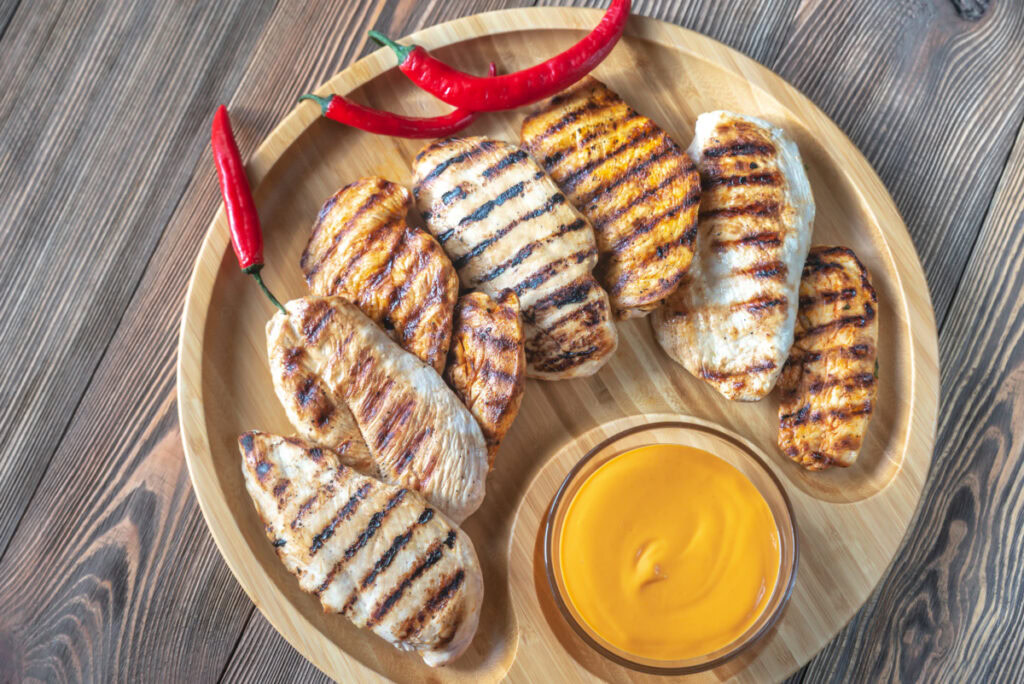
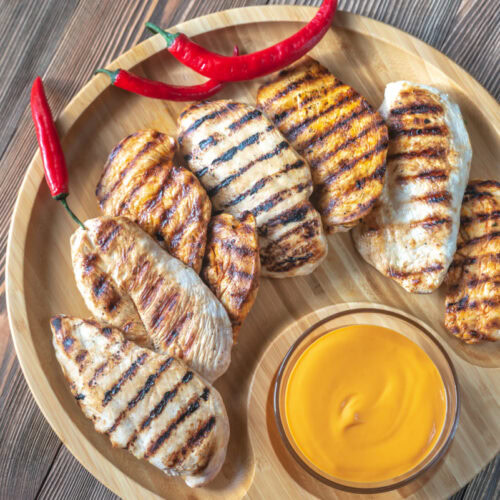
Don’t move the chicken around too much. I know it’s tempting, but leaving it alone gives you those nice grill marks.
Cooking time really depends on thickness. Thin breasts might be done in 10-12 minutes, thicker ones could go 14-16. I never cut into the chicken to check—it lets all the juices out.
Letting the chicken rest is key. If you skip it, all those tasty juices end up on your plate instead of in the meat.
Notes
Leftover grilled chicken is easy to store. I just pop it in an airtight container and keep it in the fridge for up to four days. Freezer? Up to three months, no problem.
Temperature matters more than time. Always check for 165°F in the thickest part. That’s how you keep it safe and juicy.
Resting for five minutes after grilling—don’t skip it. It really does make a difference with the juices.
Marinating time is flexible. Even 30 minutes helps, but if you can, let it go overnight. Just don’t push it past 24 hours or the texture gets weird.
What to serve? Depends on your mood, honestly. I like roasted veggies, rice, or a fresh salad. In summer, corn on the cob or coleslaw is hard to beat.
If your grill runs hot, just lower the heat or move the chicken to a cooler spot. Every grill’s got its quirks, so get to know yours.
Boneless, skinless breasts cook faster than bone-in. Thicker pieces might need a couple extra minutes. Sometimes I just pound them out so everything’s even.

Equipment
- Grill (gas or charcoal) or grill pan
- Tongs
- Instant-read meat thermometer
- Mixing bowl
- Measuring spoons and cups
- cutting board
- sharp knife
- Basting brush (optional)
- Plate (for resting)
Ingredients
- 4 boneless skinless chicken breasts about 6–8 oz each; pound to even thickness if needed
- 3 tbsp olive oil
- 2 tbsp lemon juice fresh is best
- 3 cloves garlic minced
- 1 tsp salt
- 0.5 tsp black pepper
- 1 tsp paprika
- 0.5 tsp dried oregano
- 0.5 tsp dried thyme
Instructions
- In a mixing bowl, whisk together olive oil, lemon juice, minced garlic, salt, black pepper, paprika, oregano, and thyme.
- Add chicken breasts and turn to coat well. Marinate at least 30 minutes (or up to 24 hours) in the refrigerator.
- Preheat grill to medium-high heat (about 400–450°F). Clean and lightly oil the grates.
- Remove chicken from the fridge about 15 minutes before grilling so it cooks more evenly.
- Place chicken on the grill at a slight angle. Close the lid and grill 5–7 minutes without moving it.
- Flip once and grill 5–7 minutes more. Check the thickest part with an instant-read thermometer; remove chicken when it reaches 165°F.
- Transfer to a plate and rest 5 minutes before slicing and serving (this keeps the juices in the meat).
Notes
Nutrition
Tasting Notes
When I dig into this juicy grilled chicken, the flavor really pops out at me. The seasoning gives it a savory kick that just fits with the chicken’s natural taste.
The chicken breast stays so moist inside, and there’s that nice char on the outside. I get a bit of crunch from the herbs and spices—just enough texture, but it doesn’t drown out the meat.
Every bite is full of those tasty juices. There’s a gentle smokiness from the grill that just makes everything better.
I catch hints of garlic and pepper in every forkful. The meat comes apart easily, which is always a good sign it’s cooked just right.
Temperature really matters for this. Eating it hot off the grill? The flavors hit harder, and you get more of that mouthwatering aroma.
Honestly, I like to keep the sides simple—this chicken’s got enough flavor to stand on its own. The tender, juicy texture is what keeps me making this again and again.
Those golden-brown grill marks aren’t just for show. They add a little crispiness that plays off the soft middle. I usually end up grabbing another piece, just because every bite stays interesting.