Butternut Squash Ravioli Recipe
Making butternut squash ravioli from scratch might sound like a project, but honestly, it’s not as intimidating as it looks. You get these soft pasta pillows filled with sweet, creamy squash, and they’re honestly better than what you’ll find at most restaurants.
The filling is pretty quick—just roasted squash, ricotta, and a bit of parmesan. I really like making my own butternut squash ravioli because you know exactly what’s in every bite.
Store-bought ravioli can have all sorts of fillers and stuff you don’t want, but this version is just simple, real ingredients. The pasta dough itself is basic and actually pretty forgiving, even if you’re new to homemade pasta.
You’ll see all the steps, from which tools help the most to how to shape each ravioli. I’ll throw in what this butternut squash pasta tastes like, plus a few tips I’ve picked up along the way.
Whether you’re cooking for a special night or just want to try something different, these homemade ravioli are bound to get some “wow” reactions at the table.
Equipment
Making butternut squash ravioli isn’t too bad if you’ve got the right tools. Let me walk you through what you’ll want for the pasta dough and shaping your ravioli.
For the pasta dough, you’ll need: • Large mixing bowl
- Fork or whisk
- Clean work surface or big cutting board
- Bench scraper (not required, but it helps)
For rolling and shaping the pasta, here’s what I usually grab: • Pasta machine (way easier and gives you even sheets)
- Rolling pin (totally works if you don’t have a machine)
- Ravioli cutter or sharp knife
- Ravioli stamp (gets those nice sealed edges and a fun pattern)
Honestly, the pasta machine is my go-to because it saves a ton of time and effort. If you’re rolling by hand, just expect a little workout.
For cutting and sealing, a ravioli cutter makes clean edges—round or square, up to you. The stamp is cool because it cuts and seals in one go.
You’ll also want: • Large pot for boiling
- Slotted spoon or spider strainer
- Baking sheet dusted with flour (for the uncooked ravioli)
- Clean kitchen towels
Odds are, you’ve got most of this stuff already.
Ingredients
Here’s everything you’ll need for your butternut squash ravioli. I’ve broken it up for the pasta dough, filling, and sauce.
For the Pasta Dough:
- 2 cups all-purpose flour
- 3 large eggs
- 1 tablespoon olive oil
- Pinch of salt
For the Butternut Squash Filling:
- 2 cups roasted butternut squash (about 1 medium squash)
- 1 cup homemade ricotta
- ½ cup parmesan cheese, grated
- 1 tablespoon fresh thyme, chopped
- ¼ teaspoon nutmeg
- Salt and pepper to taste
I make the squash puree by roasting the squash until it’s soft and a little caramelized. That brings out the sweetness.
For the Brown Butter Sauce:
- 6 tablespoons unsalted butter
- 8-10 fresh sage leaves
- ¼ cup toasted walnuts, chopped
- 2 tablespoons parmesan cheese for garnish
The brown butter sauce is honestly my favorite part. I cook the butter until it’s golden and smells nutty.
If you’re in the mood for something richer, you could go with a creamy garlic sauce instead. The fried sage is a nice touch—it gets crispy and goes so well with the soft ravioli.
Make sure the squash is roasted all the way before making the filling. Fresh sage and thyme really make a difference here.
Instructions
I start by roasting the butternut squash. Just cut it in half, lay it face-down on a baking sheet, and roast at 400°F for about 45 minutes until it’s soft.
Once it cools, scoop out the flesh and mash it up with ricotta, parmesan, nutmeg, salt, and pepper.
For the pasta dough, I make a little well in the flour right on my counter, crack the eggs in, and mix it all together. Knead it for 8-10 minutes until it feels smooth, then let it rest under a damp towel for about 30 minutes.
- Roll out the dough with a rolling pin or pasta machine until it’s thin—you should almost see your hand through it.
- Cut the dough into long strips, about 4 inches wide.
- Place small spoonfuls of the filling about 2 inches apart on one strip.
- Brush a bit of water around each mound of filling.
- Lay another strip of pasta on top and press gently around the filling to seal it.
- Cut out individual ravioli with a knife or pastry cutter.
- Press the edges with a fork to make sure they’re sealed.
Bring a big pot of salted water to a boil. Gently drop the ravioli in and cook for 3-4 minutes, just until they float.
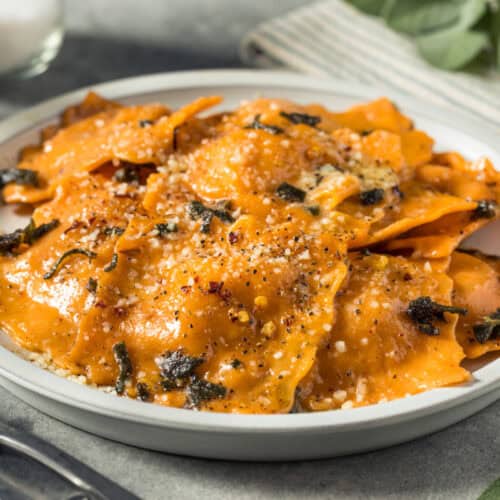
For the sauce, melt the butter in a pan with the sage leaves until it’s golden and smells kind of nutty. Toss the cooked ravioli in the sauce and serve right away with extra parmesan.
Notes
If you want to save time, make the filling a day ahead. It needs to cool completely before you start filling the ravioli anyway, so prepping it early makes things go smoother.
You can freeze uncooked ravioli for up to three months. Just lay them out in a single layer on a parchment-lined baking sheet and freeze until solid.
Once they’re frozen, toss them in a freezer bag. You can cook them right from the freezer—just add a minute or two to the cooking time.
Fresh pasta dough really works best here, but if you’re in a pinch, wonton wrappers are a decent shortcut. The texture’s a bit different, but they’re still pretty tasty and save a bunch of time.
Brown butter sage sauce is honestly my favorite with these ravioli. But if you want something lighter, just a drizzle of olive oil and some parmesan is also really good.
Ricotta gives the filling that creamy texture, but you could use mascarpone if you want it even richer. I’ve tried that in other squash recipes and it’s always a hit.
Make sure the ravioli edges are sealed tight so they don’t open up while cooking. I usually crimp them with a fork after sealing with water or egg wash.
Store cooked ravioli in the fridge for up to two days. Toss them with a little olive oil to keep them from sticking, and reheat gently in sauce or with a splash of water in the microwave.
Don’t let the ravioli overcook. They just need three to four minutes in boiling water—when they float, they’re done.

Equipment
- Baking sheet
- Large mixing bowl
- Fork or whisk
- Clean work surface or cutting board
- Bench scraper (optional)
- Pasta machine or rolling pin
- Ravioli cutter or sharp knife
- Ravioli stamp or fork (for sealing)
- Large pot
- Slotted spoon or spider strainer
- Skillet or sauté pan
- Baking sheet dusted with flour (for holding ravioli)
- Clean kitchen towels
Ingredients
- 2 cups all-purpose flour
- 3 large eggs
- 1 tablespoon olive oil
- 1 pinch salt plus more for boiling water
- 1 medium butternut squash roasted, to yield about 2 cups mashed/puréed
- 1 cup ricotta cheese homemade or store-bought
- 1/2 cup Parmesan cheese grated, plus more for serving
- 1 tablespoon fresh thyme chopped
- 1/4 teaspoon ground nutmeg
- black pepper to taste
- 6 tablespoons unsalted butter
- 8-10 leaves fresh sage
- 1/4 cup walnuts toasted and chopped
- 2 tablespoons Parmesan cheese for garnish
Instructions
- Roast the squash: Heat the oven to 400°F (200°C). Halve the butternut squash lengthwise, scoop out the seeds, and place cut-side down on a baking sheet. Roast until very tender and lightly caramelized, about 45 minutes. Cool until easy to handle, then scoop out the flesh and mash or purée until smooth.
- Make the filling: In a bowl, combine 2 cups mashed roasted squash, ricotta, 1/2 cup grated Parmesan, thyme, nutmeg, salt, and pepper. Mix until smooth. Chill the filling while you make the dough (it’s easier to portion when cool).
- Make the pasta dough: Mound the flour on a clean work surface and make a wide well in the center. Add eggs, olive oil, and a pinch of salt. Use a fork to whisk the eggs, gradually pulling flour into the center until a shaggy dough forms.
- Knead and rest: Knead the dough 8–10 minutes until smooth and elastic (add a tiny bit of flour if sticky). Cover with a damp towel or wrap and rest 30 minutes at room temperature.
- Roll the pasta: Divide dough into 2–4 pieces. Keep unused pieces covered. Roll with a pasta machine (or rolling pin) into thin sheets—you should almost see your hand through the dough. Cut sheets into long strips about 4 inches (10 cm) wide.
- Fill and seal: Spoon small mounds of filling (about 1 teaspoon to 1 tablespoon, depending on size) onto one strip, spacing them about 2 inches apart. Lightly brush water around each mound. Lay a second strip on top and press around the filling to remove air and seal.
- Cut ravioli: Use a ravioli cutter, stamp, or sharp knife to cut individual ravioli. Press edges firmly (use a fork if needed). Transfer to a flour-dusted baking sheet and keep covered with a towel.
- Cook: Bring a large pot of well-salted water to a gentle boil. Add ravioli and cook 3–4 minutes, or until they float and the pasta is tender. Remove with a slotted spoon or spider.
- Make the brown butter sauce: While the ravioli cook, melt butter in a skillet over medium heat. Add sage leaves and cook until the butter turns golden-brown and smells nutty and the sage is crisp. Stir in toasted walnuts.
- Toss and serve: Add drained ravioli to the skillet and gently toss to coat (add a splash of pasta water if needed). Serve immediately with Parmesan on top.
Notes
Nutrition
Tasting Notes
The first thing that hits me when I bite into this butternut squash ravioli is the creamy, just-sweet-enough filling. It sort of melts away, and honestly, it tastes like fall—if you could eat a season.
The pasta’s tender, but it holds up well and doesn’t fall apart. I’m a fan of how the edges crisp up a bit when I pan-fry them in butter after boiling—kind of addictive.
That butternut squash flavor comes through—rich, earthy, not sugary at all. There’s this whisper of nutmeg and sage in the filling, which gives it a warm, savory vibe. It reminds me a little of Thanksgiving, in a good way.
Brown butter sauce? Game changer. The nutty notes from the butter really make the squash pop. I usually throw some Parmesan on top; the salty, sharp kick balances everything out.
Inside, the filling’s smooth and velvety if you mash the squash well. No weird lumps or gritty bits, thank goodness. I like when it feels light, not heavy or dense.
Honestly, these ravioli are at their best fresh. The pasta’s got this delicate, silky thing going on that store-bought just can’t match. There’s something about homemade—it just tastes better.