Asian Biangbiang Noodles Recipe
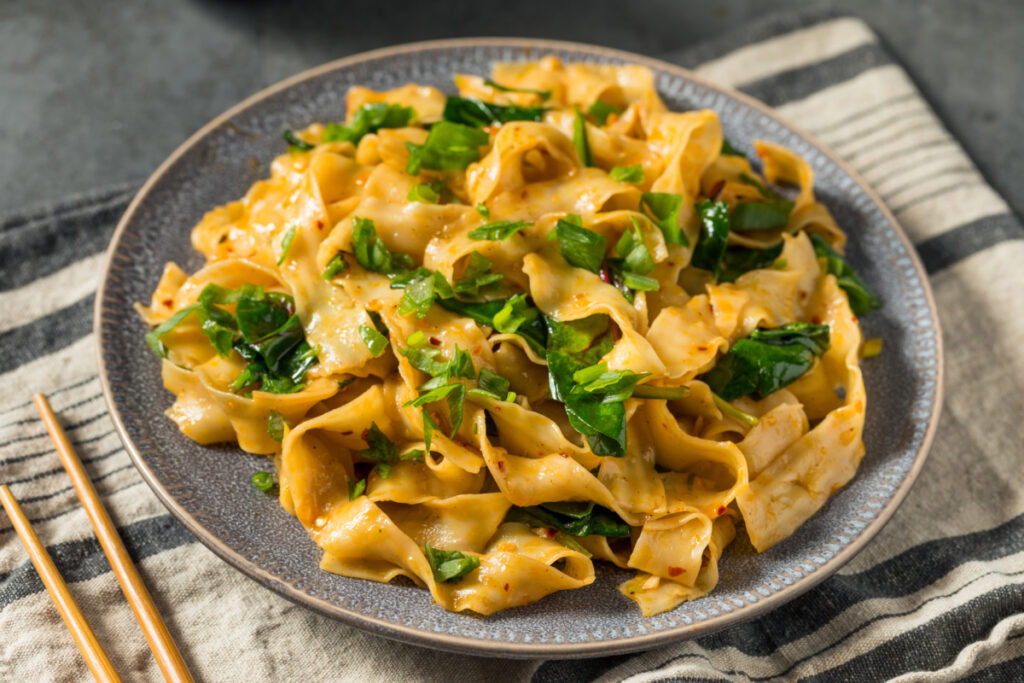
Biangbiang noodles are those wide, hand-pulled noodles from Shaanxi province, famous for the “biang” sound they make when slapped on the counter. These chewy, belt-like noodles get tossed in a spicy, fragrant sauce with chili oil, soy sauce, and black vinegar.
I still remember the first time I tried them at a tiny noodle shop—honestly, I was hooked right away. The texture is so satisfying, and the flavors are bold in the best way.
Making biangbiang noodles at home sounds a little intimidating, but it’s honestly not that bad. The dough uses just a handful of ingredients and needs a bit of resting time.
Once you get the hang of stretching the noodles, you’ll probably want to make them again and again. There’s something weirdly fun about the process.
This recipe breaks down each step, from mixing the dough to putting together the sauce. I’ll walk you through the equipment, the ingredients that make these noodles pop, and a few tips from my own kitchen experiments.
Equipment
Making biangbiang noodles at home doesn’t need anything fancy or high-tech. I use just a couple of basics you likely already have.
Here’s what I grab:
- Large mixing bowl – for mixing the dough
- Rolling pin – to flatten the dough
- Clean work surface – a counter or big cutting board is fine
- Bench scraper or knife – to cut the dough strips
- Large pot – for boiling the noodles
- Colander – to drain the noodles
- Serving bowls – for eating, obviously
- Measuring cups and spoons – for accuracy, but eyeballing works in a pinch
You’ll want a good amount of space cleared off before you start. Stretching the noodles gets messy fast.
I’ve found a wooden rolling pin works better than marble. The dough sticks less, so you’re not fighting with it.
No need for special noodle gadgets. I’ve made these plenty of times with nothing but the basics.
Just make sure your pot holds at least 6 quarts of water. The noodles like their space and cook better that way.
Ingredients
One thing I love about homemade biangbiang noodles is how simple the ingredient list is. These hand-pulled noodles are a type of Chinese noodles that really don’t need much to shine.
For the Noodles:
- 2 cups all-purpose flour
- 1/2 teaspoon salt
- 3/4 cup warm water
- 1 tablespoon vegetable oil
For the Noodle Sauce:
- 3 tablespoons light soy sauce
- 2 tablespoons Chinese black vinegar (or Chinkiang vinegar)
- 1 tablespoon rice vinegar
- 2 teaspoons sesame oil
- 1/4 cup peanut oil (or vegetable oil)
- 2 cloves garlic, minced
- 3 tablespoons chili flakes (or Chinese chili flakes)
- 1 teaspoon Sichuan peppercorns, crushed
- 1/2 teaspoon sugar
For Toppings:
- 3 green onions, chopped
- 2 cups bok choy or another leafy green
- 1 tablespoon toasted sesame seeds
- Fresh cilantro (optional)
The biang biang noodles recipe calls for pretty basic stuff. The magic is really in the balance of the sauce—vinegar, soy sauce, and oils.
I always crush whole Sichuan pepper for more punch. The chili flakes bring the heat, and the sesame oil adds that nutty thing I can’t get enough of.
Want it spicier? Just toss in more Chinese chili flakes. Up to you.
Instructions
I start by dumping the flour into a big bowl and adding the salt. I make a little well in the middle and slowly pour in the water, mixing with chopsticks or a fork until it gets shaggy.
Then I knead it on the counter for about 10 minutes until it’s smooth and stretchy. I cover it with a damp towel and let it sit for half an hour at room temp.
After the rest, I cut the dough into 8 equal pieces and roll each into a log, about 6 inches long. I coat each log with oil and lay them on a plate, then cover and let them chill for another 2 hours.
When it’s time to cook, I bring a big pot of water to a boil. I grab a dough log and start stretching it from the center, working outward.
I slap it down on the counter a couple times to help it stretch into a long, wide noodle—about two or three feet if I’m lucky.
- Pull the noodle until it’s about 1-2 inches wide
- Tear it down the middle for the traditional look (if you want to get fancy)
- Drop it right into the boiling water
I cook each noodle for 2-3 minutes, until it floats. Then I scoop it out with tongs and toss it in a bowl.
Repeat with the rest, one at a time, for the best texture.
Notes
Noodle width is totally up to you. I usually go for 1 to 2 inches, but you can play around.
The dough needs at least 30 minutes to rest. This helps the gluten chill out, making the noodles way easier to stretch.
Honestly, if you can let it rest 2 hours, it’s even better.
If your kitchen is cold, the dough will be tougher to work with and might tear more easily. Just something to keep in mind.
You can make the dough ahead and stash it in the fridge for up to a day, wrapped in plastic. Just let it come back to room temp before you stretch.
Slapping the noodles is a skill that takes a little practice. My first few tries were pretty rough—don’t sweat it if yours break or look weird.
For the chili oil, you can always adjust the heat. I use less when cooking for my family, but I’ll sneak in extra for myself.
Fresh noodles cook fast—usually 3 to 4 minutes. Don’t wander off or they might get mushy.
Cooked noodles don’t keep well, so just make what you’ll eat. If you want, you can freeze the stretched, uncooked noodles on a baking sheet, then pop them in a freezer bag.
The vinegar in the sauce isn’t just for show—it really brightens up the whole bowl and balances out the oil.

Equipment
- Large mixing bowl
- Rolling Pin
- Clean work surface
- Bench scraper or knife
- Large pot (6-quart or larger)
- Colander
- Measuring cups and spoons
- Tongs or chopsticks
- Small saucepan or heatproof bowl (for hot oil)
- Serving bowls
Ingredients
- 2 cups all-purpose flour
- 1/2 tsp salt
- 3/4 cup warm water add a splash more if needed
- 1 tbsp vegetable oil for the dough, plus more for coating
- 3 tbsp light soy sauce
- 2 tbsp Chinese black vinegar Chinkiang vinegar
- 1 tbsp rice vinegar
- 2 tsp sesame oil
- 1/4 cup peanut oil or vegetable oil, for sizzling over aromatics
- 2 cloves garlic minced
- 3 tbsp chili flakes Chinese chili flakes preferred
- 1 tsp Sichuan peppercorns crushed
- 1/2 tsp sugar
- 3 green onions chopped
- 2 cups bok choy or another leafy green
- 1 tbsp toasted sesame seeds
- fresh cilantro optional, for serving
Instructions
- Make the dough: In a large bowl, whisk flour and salt. Make a well and slowly pour in warm water, mixing with chopsticks or a fork until a shaggy dough forms.
- Knead: Turn dough onto a work surface and knead until smooth and elastic, about 10 minutes. Cover with a damp towel and rest at room temperature for 30 minutes.
- Portion and oil-rest: Cut dough into 8 equal pieces. Roll each into a 6-inch log, then lightly coat each piece with oil. Arrange on a plate, cover, and rest for 2 hours (or refrigerate up to 24 hours; bring to room temperature before pulling).
- Prep sauce and toppings: In each serving bowl, combine soy sauce, black vinegar, rice vinegar, sesame oil, sugar, minced garlic, chili flakes, and crushed Sichuan peppercorns. Set aside. Chop green onions and rinse the bok choy.
- Cook greens: Bring a large pot of water to a boil. Blanch bok choy for 1–2 minutes until bright green and tender-crisp; remove and drain.
- Pull the noodles: Working with one dough log at a time, flatten slightly with your hands, then stretch from the center outward. Slap the dough against the counter a few times to help elongate. Pull into a long, wide noodle about 1–2 inches wide. (Optional: tear down the center lengthwise for the traditional look.)
- Boil: Drop the noodle into boiling water immediately. Cook 2–3 minutes until it floats and turns slightly translucent. Remove with tongs and transfer to the sauce bowl. Repeat with remaining pieces, cooking one at a time for best texture.
- Sizzle oil: Heat peanut oil until shimmering and very hot (but not smoking). Carefully pour the hot oil over the chili flakes/garlic mixture in each bowl to bloom the aromatics.
- Toss and serve: Add bok choy, green onions, and sesame seeds. Toss well so the sauce coats the noodles. Top with cilantro if using and serve immediately.
Notes
Nutrition
Tasting Notes
When I first tried these biangbiang noodles, the texture really stood out. They’re thick, wide, and have this chewy bite that just feels right—honestly, that’s what makes Shaanxi food so unique.
The flavors come at you in waves. There’s this nutty hit from the sesame oil, then the chili oil sneaks up with some heat that doesn’t smack you right away.
Black vinegar brings a tangy kick that sort of brightens everything up. I love how the sauce just grabs onto those wide noodles and doesn’t let go.
Every bite is loaded with garlic, soy sauce, and spices, all mingling together. The noodles remind me a bit of fresh pasta, but they’ve got more heft, if that makes sense.
There’s something about the bounce of hand-pulled noodles that you just can’t get from the dried stuff. I kept reaching for more, even after they’d been sitting out for a few minutes.
You can tweak the spice, depending on how much chili oil you want. I like mine with a decent punch, but the other flavors still come through. The garlic is bold—aromatic, but not in-your-face.
This dish from the Chinese tradition just feels like comfort food, but it’s got a little thrill to it too. Even though it’s made with pretty basic ingredients, it ends up tasting way more complex than you’d expect.
Vinegar keeps it from feeling too heavy, which I really appreciate.