Lemon Pepper Seasoning Recipe
Lemon pepper seasoning is one of those little kitchen tricks that just makes food pop. I used to grab it at the store, but honestly, it’s so fast and easy to make yourself.
Whipping up your own lemon pepper seasoning takes maybe five minutes, and it’s way fresher and more full of flavor than the stuff in a jar.
I like having a homemade batch around because I know exactly what’s in it. You get that bright lemon kick, plenty of pepper, and none of those odd preservatives or anti-caking powders.
You can tweak the recipe too, which is always nice.
This blend only needs a handful of basic ingredients—chances are, they’re already in your kitchen. I’ll go through what you need, the tools that make it easier, and how to pull it all together.
You’ll also get some tips on storing it and what dishes it just makes better.
Equipment
Making lemon pepper seasoning is honestly a breeze, and you barely need anything special. I just use a couple of tools that most folks already have.
The big thing is something to grind your spices. You’ve got options here. I usually grab a spice grinder because it’s quick and gives a nice, fine blend.
No grinder? A mortar and pestle does the job and lets you play with the texture a bit.
Here’s what I reach for:
- Spice grinder or a coffee grinder (one that’s just for spices)
- Mortar and pestle (if you’re skipping the grinder)
- Microplane grater or zester for the lemon
- Mixing bowl
- Measuring spoons
- Airtight jar or container
- Baking sheet (if you’re drying out fresh zest)
The microplane gets you that fine zest without any of the bitter white part. If you’re using fresh lemons, a baking sheet comes in handy for drying the zest before mixing.
I’d say use a clean, dry grinder if you have one—it’s fast and gives a nice, even texture. Just double check everything’s dry, since moisture can make the seasoning clump.
Ingredients
Making lemon pepper at home is honestly pretty straightforward. You just need a few things.
Here’s what goes in:
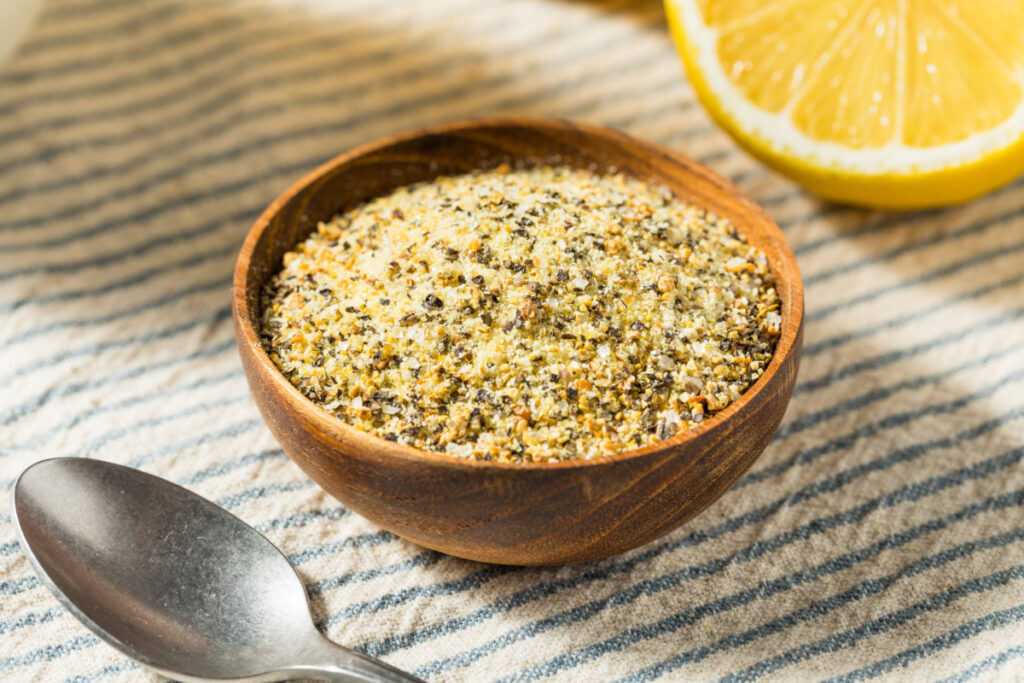
- 2 tablespoons black pepper (I’m a fan of coarsely ground or cracked for more bite)
- 2 tablespoons lemon zest (fresh zest is best, but dried works if that’s what you’ve got)
- 1 tablespoon kosher salt (sea salt or even regular salt is fine)
- 1 teaspoon garlic powder
- 1 teaspoon onion powder
The lemon zest is the star here. I always reach for fresh lemons if I can—nothing beats that flavor. If you’re out, dried zest or peel will do in a pinch.
For the pepper, I like it coarse for a little crunch. Regular ground pepper is totally fine too.
Salt-wise, kosher is my usual, but sea salt or flaky salt are both solid picks. They all have a slightly different vibe, so go with your favorite.
The garlic and onion powder add a little something extra. They round out the sharpness from the lemon and pepper.
Instructions
Putting this together is super simple and doesn’t take long at all. I always start by grabbing everything I need first.
Here’s how I throw it together:
- Zest the lemons with a microplane, sticking to the yellow part (skip the white pith)
- Spread the zest in a thin layer on a parchment-lined baking sheet
- Dry the zest by leaving it out for a day or two, or pop it in a 200°F oven for about 15-20 minutes until it’s dry and crumbly
- Mix the dried zest with black pepper in a bowl
- Add salt, plus garlic and onion powder if you want
- Stir everything up with a spoon or whisk
- Store the blend in an airtight jar or container
The biggest thing is making sure your zest is totally dry. If it’s even a little damp, your seasoning will clump and might even get moldy.
I like to crush the dried zest with my fingers as I add it in—it helps it mix better.
Freshly cracked black pepper really makes a difference here. If you’ve only got pre-ground, that’s fine, but the fresh stuff is just so much better.
Notes
Keep your lemon pepper seasoning in an airtight jar so it stays fresh and keeps its flavor. I usually use a glass jar with a good lid or a little spice container.
It’ll last around 3-4 months if you store it in a cool, dry spot. Try to keep it away from the stove or direct sunlight.
Smaller batches are best—that way, you use it while it’s still got that bright lemony taste. The zest does fade over time, so making it fresh is worth it.
Feel free to play with the salt. If you’re cutting back on sodium, just use less or skip it.
Freshly ground black pepper is where it’s at for flavor. Pre-ground is okay, but it’s just not as bold.
Some days I add a pinch of garlic or onion powder for extra flavor. You can even toss in a little dried thyme or oregano if you’re feeling it.
Just make sure your zest is bone dry before you mix it with everything else. Moisture is the enemy here.
Label your jar with the date—it helps keep track of how old it is. I always forget otherwise.
If the blend starts to clump up, a couple grains of rice in the jar can help soak up any extra moisture.

Equipment
- Microplane grater or zester
- Baking sheet
- Parchment paper (optional)
- Mixing bowl
- Measuring spoons
- Spice grinder or mortar and pestle (optional)
- Airtight jar or container
Ingredients
- 2 tablespoons black pepper coarsely ground or cracked (or grind whole peppercorns)
- 2 tablespoons lemon zest from fresh lemons; dry before mixing (or use dried lemon peel)
- 1 tablespoon kosher salt or sea salt; adjust to taste
- 1 teaspoon garlic powder optional but recommended
- 1 teaspoon onion powder optional but recommended
Instructions
- Zest 2–3 lemons using a microplane, only taking the yellow peel and avoiding the white pith.
- Spread the zest in a thin, even layer on a parchment-lined baking sheet.
- Dry the zest until crumbly: bake at 200°F (95°C) for 15–20 minutes, stirring once, or air-dry at room temperature for 1–2 days. Let cool completely.
- In a mixing bowl, combine dried lemon zest and black pepper. Crush any larger zest pieces between your fingers so the blend is even.
- Add salt, garlic powder, and onion powder. Stir well to fully combine.
- For a finer texture, pulse the blend briefly in a clean, completely dry spice grinder (optional).
- Transfer to an airtight jar. Store in a cool, dry place and use within 3–4 months for best flavor.
Notes
Nutrition
Tasting Notes
When I first toss this seasoning onto my food, the bright citrus aroma jumps out at me. The lemon? It hits my nose before anything else, honestly.
That first bite gives a sharp, tangy lemon taste that really wakes up my taste buds. It’s zesty and fresh—definitely doesn’t taste fake or weirdly chemical.
Black pepper sneaks in right after with a mild, warming heat. It tingles on my tongue, but it’s not too spicy, which I appreciate.
I’m always surprised by how well the two flavors play together. Lemon brings this brightness, and then the pepper adds a gentle kick.
Whenever I use lemon pepper on chicken wings, the seasoning forms a crispy, tasty coating that just makes me hungry. The citrus cuts through the richness of the meat in the best way.
The texture’s a little coarse and grainy, thanks to the pepper and dried lemon peel. It really sticks to the meat, especially if it’s a bit moist.
For chicken wings, I usually sprinkle it on both before and after they’re cooked. That seems to make all the difference.
The aftertaste is clean and kind of refreshing. I don’t get any of those bitter or sour notes you sometimes find in store-bought stuff. The pepper hangs around just enough to keep things interesting, but it never takes over.