Spinach and Ricotta Ravioli Recipe
Making ravioli at home might sound a little intimidating at first, but honestly, this spinach and ricotta ravioli recipe breaks it down into steps that actually make sense.
You get that classic Italian combo—fresh spinach and creamy ricotta—tucked inside soft pasta dough, and it feels like something you’d order at a cozy trattoria, just without leaving your kitchen.
I’ve been making these for a while now, and every single time, people ask for seconds. It never gets old.
The filling is really what makes these ravioli stand out. Ricotta is mild, spinach is earthy, and together they just work. You can always tweak the seasoning if you want to go a little bolder.
Once you try homemade, those store-bought ones just feel, well, kind of sad in comparison.
This recipe gives you what you need to make those little pasta pillows from scratch. I’ll talk about the tools, the ingredients, and each step—plus a few notes from my own kitchen.
You’ll get a feel for what works best, and hopefully, what the finished plate should taste like.
Equipment
You don’t need a ton of fancy gadgets for homemade spinach and ricotta ravioli, but a few key tools make life easier. I’ve found the right setup can turn a chore into something pretty fun.
For rolling and shaping the pasta dough, here’s what you might want:
- Rolling pin (if you’re going old-school)
- Pasta machine (manual or electric)
- Marcato Atlas pasta machine (my go-to)
- Marcato Atlas with pasta roller attachment
- Bench scraper (helps with cutting and moving dough)
The pasta roller attachment is especially handy for getting those pasta sheets thin and even. If you’re using a rolling pin, it just takes a little more elbow grease.
For cutting and forming the ravioli, you’ll want one of these:
- Ravioli cutter (round or square, whatever you like)
- Ravioli stamp (for single pieces)
- Ravioli mold (makes a bunch at once)
- Ravioli maker (does the cutting and sealing together)
I usually grab a ravioli stamp—it’s quick and seals the edges nicely. If you’re making a big batch, a ravioli mold is a lifesaver.
Other helpful things:
- Big pot for boiling
- Fork (if you want to crimp the edges)
- Clean kitchen towels
- Small bowl of water (for sealing edges)
Honestly, you don’t need every single thing here. Just pick what fits your kitchen and how often you think you’ll make pasta from scratch.
Ingredients
For spinach and ricotta ravioli, you’ve got two main parts: the pasta dough and the filling. Here’s what you’ll need to grab before you get started.
For the Ravioli Dough
- 2 cups 00 flour (plus a bit extra for dusting)
- 2 tablespoons semolina flour
- 3 large eggs
- 1 teaspoon olive oil
- Pinch of salt
Using both 00 flour and semolina gives the dough that just-right texture. This egg pasta dough is what makes homemade ravioli feel special.
For the Spinach Ricotta Filling
- 1 cup whole milk ricotta (or fresh ricotta if you can find it)
- 1 cup fresh spinach, cooked and squeezed dry
- ½ cup grated Parmigiano Reggiano
- ¼ cup Pecorino Romano, grated
- 1 egg yolk
- ¼ teaspoon nutmeg
- Salt and black pepper to taste
The filling is where the magic happens. I always reach for whole milk ricotta—it’s creamier, and you can taste the difference.
Just make sure you really squeeze out the spinach; too much water will mess up the texture. Both cheeses add some real depth, and the nutmeg is subtle but gives it a little something extra.
Instructions
I start with the pasta dough—just mix it up and let it rest for about half an hour on the counter. That rest makes it way easier to roll out later.
While the dough chills, I throw together the spinach and ricotta filling in a bowl and stash it in the fridge until I’m ready to use it.
Rolling and cutting the dough:
- Divide the dough into four pieces and work with one at a time.
- Roll each piece through the pasta machine, starting at the widest setting and working down to about setting 6 or 7.
- Lay the pasta sheet on a floured surface and slice it into strips about 4 inches wide.
Filling and sealing the ravioli:
- Drop little spoonfuls of filling about 2 inches apart on one pasta strip.
- Brush a bit of water around each mound to help the ravioli seal.
- Lay another strip on top and press down around the filling to push out any air.
- Cut out the ravioli with a cutter or knife.
- Press the edges with a fork if you want to be sure they’re sealed.
To keep them from sticking, I put them on a floured baking sheet in a single layer. You can cook them right away or freeze them for later.
For fresh ravioli, I boil salted water and cook them for 3-4 minutes, just until they float. If I’m cooking them from frozen, I toss them in straight from the freezer and add a couple extra minutes.
Notes
You can freeze these ravioli for up to three months. Just lay them out on a baking sheet, freeze until solid, then move them to a freezer bag. Cook them straight from the freezer—just add a few extra minutes to the boiling time.
The sauce is really up to you. I’m partial to a simple butter and sage sauce—just melt butter and crisp up some sage leaves. Or you can do a garlic butter sauce by sautéing minced garlic in butter for a minute or two.
If you’re feeling like something richer, go for a creamy alfredo sauce. But honestly, sage butter is hard to beat with this filling.
Keep uncooked ravioli in the fridge for up to two days on a floured baking sheet, covered with plastic wrap. Make sure they’re not touching or they’ll stick together.
When you’re boiling the ravioli, use plenty of salted water and don’t crowd the pot. They’re ready when they float, which usually takes about 3-4 minutes.
You can make the filling a day ahead and keep it in the fridge. It actually makes the assembly go a bit faster.
If your dough feels dry while rolling, give it a light mist with water. Too sticky? Dust with a little more flour. The dough should feel smooth and just a tiny bit tacky—not wet.

Equipment
- Mixing bowl
- Fork or dough whisk
- Bench scraper
- Rolling pin or pasta machine
- Ravioli cutter or stamp
- Small pastry brush
- Large pot
- Slotted spoon
- Baking sheet
- Clean kitchen towels
Ingredients
- 2 cups 00 flour plus extra for dusting
- 2 tbsp semolina flour
- 3 large eggs
- 1 tsp olive oil
- 1 pinch salt for dough, plus more for boiling water
- 1 cup whole milk ricotta or fresh ricotta
- 1 cup spinach cooked and squeezed very dry
- 1/2 cup Parmigiano Reggiano finely grated
- 1/4 cup Pecorino Romano finely grated
- 1 egg yolk
- 1/4 tsp ground nutmeg
- black pepper to taste
Instructions
- Make the dough: In a bowl (or directly on a clean work surface), combine 00 flour, semolina, and salt. Make a well, add the eggs and olive oil, then mix until a shaggy dough forms. Knead 8–10 minutes until smooth and elastic.
- Rest: Wrap the dough tightly and let it rest at room temperature for 30 minutes.
- Make the filling: Mix ricotta, spinach, Parmigiano, Pecorino, egg yolk, nutmeg, salt, and pepper until smooth. Refrigerate while you roll the dough.
- Roll the pasta: Divide dough into 4 pieces. Working with one piece at a time (keep the rest covered), roll through a pasta machine from the widest setting down to about setting 6–7, dusting lightly as needed, until thin but sturdy.
- Portion: Lay a sheet on a lightly floured surface and cut into 4-inch-wide strips.
- Fill: Place small spoonfuls of filling about 2 inches apart on one strip. Brush a little water around each mound.
- Seal: Lay a second strip over the top. Press around each mound to remove air and seal. Cut into ravioli with a cutter/stamp (or a knife). Crimp edges with a fork if desired.
- Hold: Arrange ravioli in a single layer on a floured baking sheet and cover with a towel. Cook right away, refrigerate up to 2 days, or freeze.
- Cook: Bring a large pot of well-salted water to a gentle boil. Cook fresh ravioli 3–4 minutes, until they float and the pasta is tender. (From frozen: boil straight from freezer and add 2–3 minutes.)
Notes
Nutrition
Tasting Notes
When I take a bite of this homemade spinach and ricotta ravioli, the first thing that hits me is the tender pasta—it just sort of yields in the best way. The texture is soft, but there’s still a bit of chew, which I really like.
The filling is creamy, thanks to the ricotta, and there’s this mellow earthiness from the spinach. It’s not in-your-face, just kind of gentle.
Honestly, the combo almost reminds me of a lighter lasagna. The ricotta gives a little sweetness, and the spinach brings this subtle, leafy thing that works.
If I go for butter and sage, it adds a nutty, rich note that really plays well with the filling. Tomato sauce, on the other hand, makes the cheese taste even more savory and brightens the whole thing up.
It never feels too heavy or over the top. I end up feeling satisfied, not stuffed, after a plate.
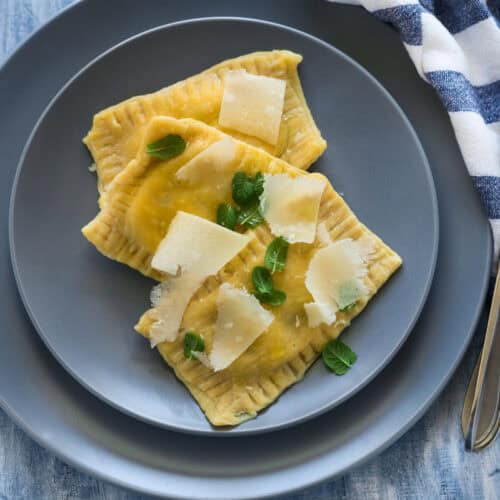
The spinach leaves little green flecks in the ricotta, and it just looks good on the plate. A handful of fresh parmesan on top gives a sharp, salty kick that ties it all together.
I do notice the pasta edges where they’re sealed—they’re a bit thicker. Those bites are all about the pasta itself, which I kind of like between the stuffed parts.
Overall, the taste is mild and honestly pretty comforting. It’s nice as a main dish, but also works well as a starter if you’re having something more filling later. The flavors are simple, so you can pair them with all sorts of sauces and not worry about things clashing.