Pumpkin Ravioli Recipe
Pumpkin ravioli is one of those dishes that feels both cozy and kind of fancy at the same time. The sweet, earthy pumpkin tucked inside tender pasta just hits the spot, especially when you want something a little different.
This recipe will take you through making fresh pasta from scratch and stuffing it with a tasty pumpkin filling. It usually takes me about two hours, give or take, but honestly, it’s worth every minute. I’ve made it a bunch of times for friends and family, and it always gets a good reaction.
It might look a bit tricky on paper, but once you get going, it’s a lot more doable than you’d expect. You’ll need some basic kitchen stuff, and probably already have most of it at home. Just don’t rush the dough—give yourself time, and you’ll be fine.
I’ll walk you through the equipment, the best ingredients to use, and how to shape each ravioli so they don’t fall apart in the pot. I’ve picked up a few tricks for getting the texture just right, and I’ll share what flavors work really well with this dish.
Equipment
Having the right tools makes homemade pumpkin ravioli a whole lot easier. Here’s what I usually grab before I start.
For rolling and shaping the dough:
- Pasta roller or pasta machine (gets the dough nice and thin)
- Rolling pin (totally works if you don’t have a machine)
- Pasta maker (not required, but it does speed things up)
Getting the dough thin enough is honestly the most important part. I use my pasta machine and roll it out to the thinnest setting. If you’re going old school with a rolling pin, it’ll take a little muscle, but you’ll get there.
For cutting and sealing:
- Ravioli cutter or fluted pastry wheel (for those zigzag edges)
- Ravioli mold (makes a bunch at once—handy if you’re feeding a crowd)
- Pastry wheel cutter (straight or fluted, either is fine)
- Sharp knife (if that’s all you’ve got, it works)
I’m a fan of the fluted pastry wheel because of the way it makes the edges look. Ravioli molds are great for big batches—just press the filling in, seal, and you’re set.
Other helpful items:
- Large pot for boiling
- Slotted spoon
- Clean kitchen towels
- Small bowl of water (for sealing the edges)
- Fork (if you want to crimp the edges and don’t have a pastry wheel)
Ingredients
I like to break the ingredients into two lists: one for the dough and one for the filling. If you’re short on time, you could use wonton wrappers as a shortcut—no shame in that.
For the Pasta Dough:
- 2 cups 00 flour (or all-purpose)
- 3 large eggs
- 1 tablespoon olive oil
- Pinch of salt
For the Pumpkin Filling:
- 1 cup pumpkin puree (canned or fresh)
- 1/2 cup butternut squash (roasted and mashed, totally optional)
- 3/4 cup Parmesan cheese (grated, or Parmigiano Reggiano if you’re feeling fancy)
- 1/4 teaspoon nutmeg
- Salt and pepper, to taste
- 1 egg yolk (helps the filling hold together)
For the Sage Brown Butter Sauce:
- 6 tablespoons butter
- 8-10 fresh sage leaves
- 2 cloves garlic (optional if you want a garlicky kick)
- Toasted pecans for topping
- Extra Parmesan for the table
The filling is pretty straightforward. Just mix the pumpkin with cheese, a little nutmeg, and season it up. Nutmeg really brings out the pumpkin’s natural sweetness—don’t skip it.
For the sauce, it’s just butter and sage, but the flavor is so good. Melt the butter until it’s golden and smells nutty, toss in the sage, and let the leaves get crispy. That’s it!
Instructions
I start by rolling out the pasta dough on a floured surface. You want it thin enough that you can almost see your hand through it. If you’ve got a pasta machine, I usually stop at the second-thinnest setting.
To put the ravioli together:
- Lay out one sheet of pasta on your counter.
- Drop small spoonfuls of pumpkin filling every couple inches.
- Brush a little water around each mound—just use your finger or a pastry brush.
- Lay another sheet of pasta over the top.
- Press down gently around each mound to get the air out and seal the edges.
- Cut the ravioli into squares with a knife or pastry wheel.
- Press the edges with a fork if you want to make sure they’re sealed tight.
Bring a big pot of salted water to a gentle boil. Fresh ravioli cooks fast—usually just 3 or 4 minutes.
Drop the ravioli in a few at a time so they don’t stick. They’re done when they float to the top and look a little puffy.
While those are cooking, make the brown butter sauce. Melt the butter in a pan over medium heat, add garlic if you’re using it, and cook until the butter turns golden and smells nutty.
Scoop the ravioli out with a slotted spoon and put them right in the sauce. Toss gently so they’re all coated, then serve them up.
Notes
You can use fresh or canned pumpkin puree—both work. If you go with fresh, roast it first and drain off any extra liquid, or your filling will get too runny.
I like to toast pumpkin seeds for a crunchy topping. Just toss them with olive oil and salt and bake at 350°F for about 10 minutes. They add a nice little crunch.
Uncooked ravioli will keep in the fridge for a couple of days. Lay them on a floured baking sheet and cover with plastic wrap. If you want to freeze them, just freeze on a tray and then move to a freezer bag.
The filling is actually better if you make it ahead and let the flavors blend together. A few hours or even overnight is perfect.
Don’t overcook the ravioli—they really only need a few minutes. Fresh pasta cooks way faster than dried.
If the dough’s sticking to your hands or the counter, dust on more flour. If it’s too dry and cracking, just wet your hands a bit and knead it again.
Leftover cooked ravioli will keep in the fridge for a few days. I usually reheat them gently in a skillet with a little butter or whatever sauce I have around.

Equipment
- Mixing bowls
- Fork or dough whisk
- Clean work surface
- Rolling pin or pasta machine
- Ravioli cutter or fluted pastry wheel
- Pastry brush or small bowl of water
- Large pot
- Slotted spoon
- large skillet
Ingredients
- 2 cups 00 flour (or all-purpose flour) plus more for dusting
- 3 large eggs for pasta dough
- 1 tbsp olive oil for pasta dough
- 1/2 tsp kosher salt for pasta dough
- 1 cup pumpkin puree canned or homemade; drain if watery
- 1/2 cup butternut squash roasted and mashed; optional
- 3/4 cup Parmesan cheese finely grated, plus more for serving
- 1 egg yolk helps bind the filling
- 1/4 tsp ground nutmeg
- 1/2 tsp salt or to taste, for filling
- 1/4 tsp black pepper or to taste
- 6 tbsp unsalted butter for sauce
- 8 fresh sage leaves up to 10 leaves
- 2 cloves garlic minced; optional
- 1/4 cup toasted pecans chopped, for topping (optional)
Instructions
- Make the pasta dough: Mound the flour on a clean work surface and make a well in the center. Add eggs, olive oil, and salt. Whisk with a fork, gradually pulling in flour from the edges, until a shaggy dough forms.
- Knead for 8–10 minutes until smooth and elastic. If sticky, dust with a little flour; if dry and cracking, dampen your hands and continue kneading. Wrap tightly and rest at room temperature for 30 minutes.
- Make the pumpkin filling: In a bowl, mix pumpkin puree, (optional) mashed roasted butternut squash, Parmesan, egg yolk, nutmeg, salt, and pepper until thick and smooth. Cover and refrigerate while you roll the dough.
- Roll the pasta: Divide dough into 4 pieces (keep covered). Roll one piece into a rectangle. Using a pasta machine, pass through gradually thinner settings until the sheet is very thin (you should almost see your hand through it). Dust lightly with flour as needed. Repeat with remaining dough.
- Fill and shape the ravioli: Lay one pasta sheet on a floured surface. Dollop 1–1½ teaspoons filling every 2 inches. Brush a little water around each mound. Lay a second sheet over the top and press around each mound to remove air and seal.
- Cut into squares with a ravioli cutter, fluted wheel, or knife. Press edges firmly (crimp with a fork if you like). Transfer to a floured tray and cover with a towel while you finish shaping.
- Cook the ravioli: Bring a large pot of well-salted water to a gentle boil. Cook ravioli in batches for 3–4 minutes, or until they float and the pasta looks slightly puffy. Remove with a slotted spoon (don’t drain in a colander—fresh ravioli are delicate).
- Make the sage brown butter: While ravioli cook, melt butter in a large skillet over medium heat. (Optional) Add garlic and cook 30–60 seconds. Continue cooking until butter turns golden and smells nutty, then add sage and cook until sage is crisp, 30–60 seconds.
- Toss and serve: Add cooked ravioli to the skillet and toss gently to coat. Serve immediately with extra Parmesan and (optional) toasted pecans on top.
Notes
Nutrition
Tasting Notes
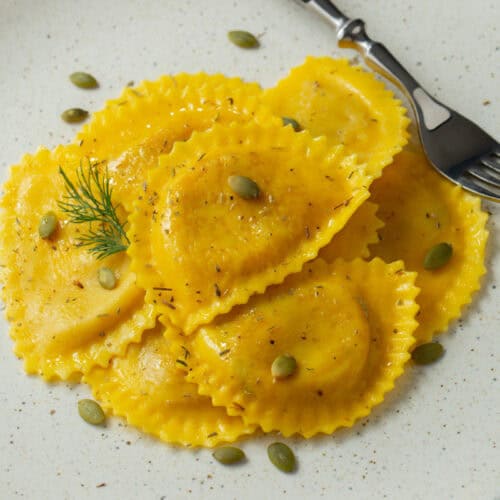
That first bite of pumpkin ravioli? It’s got this gentle sweetness from the pumpkin, but it doesn’t smack you over the head. The filling’s earthy, a bit nutty—kind of reminds me of autumn comfort food you’d find up north in Italy.
The pasta itself is thin and delicate, which is honestly just right. When I press down with my fork, it gives a little, then the creamy center sort of spills out.
The butter sage sauce is spot on here, working with the pumpkin instead of drowning it out. There’s a little warmth from nutmeg, and a faint cheesy note in the background that just adds something extra. Sage gives it this herbal edge that keeps things from feeling too rich.
Texture-wise, the filling is smooth and velvety—almost like a lighter ricotta, if that makes sense. It’s not heavy at all, which I appreciate.
I’d say the flavor leans savory, with just a hint of sweetness. A sprinkle of parmesan on top brings that salty, umami kick that ties everything together.
It’s honestly comforting without making you feel weighed down. The pumpkin really stays front and center, with everything else just playing backup. There’s something about this dish that feels like classic Italian cooking—simple, good ingredients, nothing fancy, but it all just works.